OC#1 2029

Available (58)

Showing 37 - 48 per page


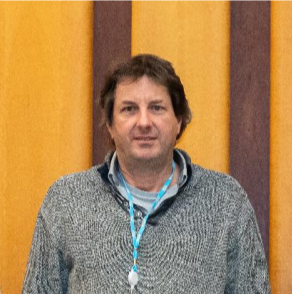
Christian Grafenauer

Description of Activities

With this fellowship, I significantly contribute to the ICT Standards landscape by addressing the lack of standardised guidelines for processing Personal Identifiable Information (PII) in blockchain and Distributed Ledger Technology (DLT) systems. Approving the New Work Item Proposal (NWIP) for “Guidelines on processing PII using blockchain and DLT” establishes a crucial foundation for privacy-preserving, GDPR-compliant blockchain applications.
By leading the creation of CEN/CENELEC JTC19 WG3, I am ensuring the development of a harmonised European approach to blockchain privacy, reducing fragmentation and fostering interoperability. These efforts align blockchain implementations with European regulations, consumer protection laws, and data governance principles.
 

Fellow's country
Impact on SMEs (7th Open Call)
Yes, my contribution significantly impacts European SMEs by providing clear, practical guidance on how to process personal data using blockchain and DLT in compliance with the GDPR. SMEs often lack the legal and technical resources to navigate complex regulatory frameworks. The standard developed through CEN/CENELEC JTC 19 WG3 will offer accessible best practices, reducing legal uncertainty and lowering barriers to innovation. This enables SMEs to adopt blockchain solutions more confidently, competitively, and responsibly within the European market.
Impact on SMEs (9th Open Call)
For SMEs, a harmonised digital currency vocabulary reduces compliance costs and uncertainty when navigating regulations like MiCA and DORA. It lowers barriers to entry by providing a shared reference for financial, legal, and technical terms, enabling smaller companies and fintechs to innovate confidently and scale solutions across the Digital Single Market.
Impact on society (7th Open Call)
My work directly supports the protection of fundamental rights, especially privacy and data protection, in the context of emerging blockchain and DLT technologies. By initiating the standard on Guidelines on processing PII using blockchain and DLT, I contribute to reducing legal uncertainty, enabling safer adoption of these technologies. This empowers citizens by ensuring their personal data is handled responsibly and in compliance with GDPR, while fostering trust and transparency in digital systems. Ultimately, this promotes responsible innovation and strengthens democratic values in the digital age.
Impact on society (9th Open Call)
By developing a harmonised vocabulary for digital currencies, it strengthens legal certainty and consumer protection, allowing citizens and businesses to engage confidently with technologies such as CBDCs, stablecoins, and tokenised assets. Clear definitions reduce misunderstanding and misinformation, supporting informed participation in digital markets.
It also enhances trust in digital public infrastructures by enabling regulators, financial institutions, and public administrations to use a shared language. This improves transparency in policymaking and aligns digital finance with Europe’s values of privacy, fairness, and accountability.
Finally, today’s Web3 ecosystem and traditional financial system speak fundamentally different languages, limiting cooperation and interoperability. This project builds the common language needed for both ecosystems to grow together and operate seamlessly, fostering a unified, transparent, and future-ready European digital economy.
Organisation type
Organization
Consumer Representative, DIN Verbraucherrat e.V.
Portrait Picture
picture
Proposal Title (7th Open Call)
Project Leader - Guidelines on processing PII using blockchain and distributed ledger technology
Proposal Title (9th Open Call)
Project Leader for "Digital Currencies - Vocabulary" in ISO TC68
Role in SDO
Standards Development Organisation
StandICT.eu Year
2026
2029
Year
Topic (9th Open Call)

Limara Haque

Description of Activities

My fellowship focuses on standardizing Non-Fungible Tokens (NFTs) for sustainable asset management, addressing gaps in digital asset representation, regulatory clarity, and ESG alignment. It supports innovation, transparency, and interoperability in tokenized real-world assets (RWAs), in line with EU priorities.
Current NFT-based RWA systems lack harmonised frameworks, causing fragmentation in asset tracking, legal recognition, and compliance. This hinders adoption across supply chains, carbon markets, and IP management. My project proposes a cross-industry standard to ensure interoperability, regulatory alignment, and lifecycle transparency.
In this sense, the there are two major priorities for this action, including: 
Standardized Multi-Asset Tokenization that enables NFT-based tracking of physical, environmental, and intangible assets. It also enhances lifecycle transparency, supports the circular economy, and ensures blockchain interoperability.
Digital Product Passport (DPP) to align NFTs with DPP for end-to-end traceability, compliance, and ESG reporting.This strengthens supply chain transparency and EU circular economy goals.

The key Challenges related to my activity are: 
Regulatory Uncertainty: Lack of clear NFT standards impedes legal and policy alignment. This initiative ensures conformity with EU law and ISO.
Adoption Barriers: Fragmented governance limits integration. Standardisation enhances technical and regulatory trust.
Sustainability Concerns: Energy-intensive DLTs are problematic. This activity promotes efficient models aligned with the Green Deal.

Consequently, this project positions Europe as a leader in NFT standardisation, fostering secure, compliant, and sustainable digital ecosystems.
 

Country
United Kingdom of Great Britain and Northern Ireland (the)
Fellow's country
Impact on SMEs (7th Open Call)
My contribution to standardising NFTs for sustainable asset management directly benefits European SMEs and societies by enabling trustworthy, interoperable, and regulatory-compliant tokenisation of real-world assets. For SMEs, this ensures more straightforward access to tokenisation frameworks, reducing costs, risks, and compliance barriers when integrating NFTs into supply chains, intellectual property, and sustainability tracking. Standardisation also enhances digital product traceability, supporting SME participation in the EU’s Digital Product Passport (DPP) initiative.
This standard actively enhances SME inclusion and access to innovation. By creating standardised, easy-to-adopt models for NFT-based asset tracking and DPP compliance, I help lower barriers for SMEs to engage in the green and digital transition. These tools enable them to demonstrate environmental accountability, meet regulatory requirements, and participate in new markets with confidence.
Impact on SMEs (9th Open Call)
My contribution directly supports European SMEs by lowering the barriers to adoption of trusted digital tools for sustainability, traceability, and compliance. Through the standardisation of tokenisation frameworks (ISO PWI 25315), SMEs can more easily issue verifiable digital representations of their products and services, aligned with EU regulations such as the Digital Product Passport (DPP), CSRD, ESPR, and MiCA.
This enables SMEs to participate in data-driven value chains, prove ESG performance, access impact finance, and engage with global supply networks, without relying on costly proprietary platforms. The work promotes interoperability, inclusion, and compliance-by-design, giving SMEs a scalable way to enter the digital economy while staying aligned with European values of fair access, innovation, and transparency.
Impact on society (7th Open Call)
This work has a range of societal impacts by embedding ethical, inclusive, and sustainability-driven principles into the standardisation of NFT-based tokenisation. By advancing a modular framework for the tokenisation of multi-asset classes, including physical goods, environmental assets, and digital identity, I am contributing to a future where transparency, accountability, and accessibility are foundational features of digital economies.
One major societal impact is the promotion of climate-conscious digital infrastructure. Through my alignment with the EU Green Deal, ISO 14097, and CIRPASS2, I have advanced tokenisation models that enable lifecycle tracking, ESG reporting, and carbon footprint disclosures, empowering organisations and communities to make data-driven, sustainable choices.
Second, the integration of semantic interoperability and decentralised identity contributes to human-centred, rights-respecting digital governance. It allows individuals and communities to verify data, control asset provenance, and participate in decentralised systems with greater security and agency.
Finally, through my role in INATBA and ISO, I have championed cross-sector collaboration on social impact tokenisation, bridging technology with policy to ensure that standards reflect public interest and global equity. These efforts strengthen citizen trust, digital sovereignty, and the ethical deployment of blockchain infrastructure at scale.
Organization
COO, Kron World S.L.
Portrait Picture
picture
Proposal Title (7th Open Call)
Standardizing NFTs for Sustainable Asset Management
Proposal Title (9th Open Call)
Tokenisation Standards for Sustainable Assets Management
Standards Development Organisation
Topic
Blockchain and distributed ledger technologies
StandICT.eu Year
2026
2029
Year

Marzia Bolpagni

Description of Activities


CEN/TC 442 is leading the publication of standards on digital construction, also referred as “building information modelling” BIM.  

Chair of CEN/ TC 442 WG2 Project Group 1 

Country
Italy
Fellow's country
Impact on SMEs (6th Open Call)
The EU stakeholders will benefit from using a consistent application in projects to avoid waste of efforts. It will be a reference for EU manufactures in their product libraries to reach the right specification level of their products. EU SMEs will reduce time in creating their own specification as they can use something already available in the industry. In this way, they will be able to work across different countries, projects, and clients.
EU Private and public clients will more easily be able to define what information they require in a repeatable way. The EU supply chain will be facilitated in producing better quality information thanks to software applications that allow automated information delivery, including checking and validation of information delivered. With the vendor-neutral, interoperable data exchange standard, software developers are provided with equal access to the market, reducing vendor lock in and enabling fair competition.
Impact on SMEs (9th Open Call)
The EU stakeholders will benefit from using a consistent process in projects to avoid waste of efforts. European SMEs will reduce time in creating their own processes and specification as they can use something already available in the industry internationally, as the standards I contributed to are developed at CEN and ISO levels. In this way, they will be able to work across different countries, projects, and clients.
Furthermore, European private and public clients will more easily be able to identify who is responsible for information management in their organisation and to set requirements in a digital way for transparent and more effective processes. The EU supply chain will be facilitated in producing better quality information thanks to software applications that follow standardised procedures included in ISO 19650 standards during the entire project lifecycle.

Impact on society (9th Open Call)
While the construction sector is a key driver of the overall economy, it faces numerous challenges relating to, inter alia, competitiveness, labor shortage, resource efficiency and especially productivity. Digitalisation in construction is increasingly recognised as a game changer, which could contribute significantly to sustainable development within the European Green Deal and the ”Europe fit for digital age” priorities. My work dealt with BIM that is seen by the European Commission as the main solution to digitalization of the construction ecosystem, for all phases of the asset lifecycle: procurement, design, construction (including assembly), operation and maintenance
Organisation type
Organization
Marzia Bolpagni
Portrait Picture
Marzia Bolpagni
Proposal Title (6th Open Call)
contribution to the development of the following three ICT standards: prCEN ISO/TS 7817-2, prEN ISO 7817-3 and UNI 11334-4 on the framework of the level of information needs when it comes to building information modelling (BIM)
Proposal Title (9th Open Call)
Information Management in Construction
Role in SDO
Standards Development Organisation
Topic
Construction and Building Information Modelling (BIM)
StandICT.eu Year
2026
2029
Year

Javier Peris

Description of Activities

In this fellowship, the main priority focuses on helping organisations to drive innovation and technological transformation using the Centre of Excellence (CoE) as the best management mechanism in a context of a shortage of professional profiles with expertise in Artificial Intelligence and other disruptive technologies.

Fellow's country
Open Call Topics
Impact on SMEs (5th Open Call)
The main opportunity for SMEs is their incorporation to a future sectorial cluster type and other potential movements of knowledge collectivisation.
Impact on SMEs (8th Open Call)
European small organisations do not have the experts or economic resources to hire specialised AI consultants, so they must postpone the application of AI in their businesses. This generates a new delay in their innovation gap. The main opportunity for SMEs is their incorporation to a future sectorial cluster type, laboratory of a City Hall, and other potential movements of knowledge collectivisation. Creating a standard on how to constitute and manage an AI Center of Excellence enables European small companies to have a higher success rate in AI innovation initiatives, making them easier to realise and reducing risk.
Impact on SMEs (9th Open Call)
Create a standard reference model for AI productivity support and automation that helps ICT professionals, teams, and departments to be more productive, focused on value creation and with better time management .ill impulse SMEs and VSMEs competitiveness opportunities. Achieving high levels of performance in ICT areas will also allow SMEs to accelerate their digital transformation.
Impact on society (9th Open Call)
Currently there are no standards dedicated directly on helping ICT professionals organise their lives. This standard will help professionals to better organise their goals and work, which will improve work-life balance. As professionals improve their organisational and productivity skills in ICT areas, this improvement will spread to other areas of the company and to society in general.
Organisation type
Organization
Business, Technology & Best Practices, S.L.
Portrait Picture
Peris
Proposal Title (5th Open Call)
AI-CoE Phase II: Artificial Intelligence for Business powered by Center of Excellence. Model and TS
Proposal Title (8th Open Call)
AI-CoE Phase-III: Proof of Concept of the CoE Reference Model on Artificial Intelligence Adoption
Proposal Title (9th Open Call)
AIxPP: Artificial Intelligence framework to improve Professional Productivity. TS Standard
Role in SDO
Standards Development Organisation
StandICT.eu Year
2026
2029
Year
Topic (5th Open Call)
Topic (9th Open Call)

Denis Pinkas

Description of Activities

The use of digital identity wallets is foreseen to be the best appropriate solution to support an age verification method, which uses the date of birth of the individual without disclosing it.

Country
France
Fellow's country
Impact on SMEs (5th Open Call)
If successful, the impact will not be restricted to European SMEs and/or European societies.
As my contributions are both for ISO and the IETF, the impact can be worldwide. However, I have not observed the presence of another European expert motivated by the topic of Age assurance systems that participates both in ISO JTC1 SC 27 and in the IETF.
Impact on society (5th Open Call)
The societal impacts can be important. Age assurance which entails age verification, age estimation and age inference is applicable for a large variety of use cases. Protection of children is the most prominent use case.
Impact on society (8th Open Call)
Access to pornographic content and age-restricted services or products available online, like alcohol, diets, self-harm or suicide information, needs to be better controlled. Legislation is necessar,y but will not be sufficient: efficient methods need to be put in place. Two main categories of solutions are promising: age estimation using AI facial analysis and digital identity wallets. The AI Act published in the Official Journal (OJ) of the European Union on 12 July 2024 considers applications using AI for age estimation as “high-risk applications”. The EUDIW (EU Digital Identity Wallet) is expected to be usable for performing age verification in both online and proximity modes. Besides these usages, age verification, estimation, or inference will be useful in other areas, such as controlling the age of teenagers or elderly people, so that they can obtain rebates. This will speed up controls and avoid the presentation of physical identity documents.
Organization
CEO, DP Security Consulting SAS
Portrait Picture
Pinkas
Proposal Title (5th Open Call)
Age-restricted accesses to services while preserving the privacy of individuals
Proposal Title (8th Open Call)
Privacy preserving age assurance systems for online or in-person access to services or goods
Standards Development Organisation
Topic
Cybersecurity
StandICT.eu Year
2026
2029
Year

Giovanni Romano

Description of Activities

The priority of my activity is the coordination of the 3GPP activities to update the ITU-R Recommendations on IMT-Advanced and IMT-2020.

Fellow's country
Open Call Topics
Impact on SMEs (4th Open Call)
European SMEs started to be quite active in 3GPP with the specification work of 5G, especially on aspects relevant to Verticals. In particular, SMEs are quite active in IMT-2020 satellite aspects and can benefit from the inclusion of 3GPP solutions in global standards defined by ITU.
Impact on SMEs (6th Open Call)
European SMEs started to be quite active in 3GPP with the specification work of 5G, especially on aspects relevant to Verticals. In particular, SMEs are quite active in IMT-2020 satellite aspects and can benefit from the inclusion of 3GPP solutions in global standards defined by ITU.
Novamint as an SME directly benefits from this grant allowing me to attend the 3GPP workshop on 6G during the RAN plenary in March.
Impact on SMEs (8th Open Call)
European SMEs started to be quite active in 3GPP with the specification work of 5G, especially on aspects relevant to Verticals. In particular, SMEs are quite active in IMT-2020 satellite aspects and can benefit from the inclusion of 3GPP solutions in global standards defined by
ITU.
Impact on society (4th Open Call)
Satellite communications are a key enabler to provide inclusion by reaching remote areas and ensure safety and communications during disasters. It is important that standardised solutions are made available (e.g., via 3GPP) and then made into ITU Recommendations which provide the Regulatory framework for a large number of countries.
Impact on society (6th Open Call)
Satellite communications are a key enabler to inclusion by reaching remote areas and ensuring safety and communications during disasters. Satellite IoT is another important market allowing low cost monitoring of goods and environment in remote areas, thus fully complementing the terrestrial networks.
Organisation type
Organization
Novamint Ltd
Portrait Picture
Giovanni Romano 3GPP Expert	Novamint Ltd United Kingdom
Proposal Title (4th Open Call)
3GPP ITU-R Ad-Hoc Convenor
Proposal Title (6th Open Call)
Recommendations M.2012 on IMT-Advanced aka 4G, and M.2150 on IMT-2020 aka 5G and to the new Recommendation on IMT-2020 satellite
Proposal Title (8th Open Call)
3GPP RAN ITU-R Ad-Hoc convenor
Role in SDO
Standards Development Organisation
Topic
5G and beyond, 6G
StandICT.eu Year
2026
2029
Year
Topic (4th Open Call)
Topic (6th Open Call)

Anita Prinzie

Description of Activities

The AI Act is a European regulation promoting the uptake of human-centric and trustworthy AI, while ensuring protection of health, safety, and fundamental rights. Companies can prove conformity with the AI Act by complying with the 10 harmonised standards drafted by CEN-CENELEC. My fellowship contributes to two harmonised standards supporting the AI Act.

Country
Belgium
Fellow's country
Open Call Topics
Impact on SMEs (4th Open Call)
I review and contribute to the prEN AI Trustworthiness Framework and prEN AI Risk Management accounting for the SME inclusiveness of the requirements. I want to enable SMEs to provide and/or deploy trustworthy AI systems while controlling AI risks taking into account their modest resources as compared to enterprises.
Impact on SMEs (5th Open Call)
The standards in general enable responsible yet affordable innovation with fast launch to market for all companies including SMEs: ensuring concrete requirements that can be integrated in existing trustworthy AI and risk management processes and day-to-day business operations.
Impact on SMEs (7th Open Call)
The EN AI Trustworthiness Framework and the EN AI Risk Management support European companies, including both SMEs and large enterprises, develop and use trustworthy AI systems that comply with the AI Act in a practical way, while still supporting profitable innovation. Furthermore, I review and contribute to the prEN AI Trustworthiness Framework and prEN AI Risk Management accounting for the SME inclusiveness of the requirements. I want to enable SMEs to provide and/or deploy trustworthy AI systems while controlling AI risks taking into account their modest resources as compared to enterprises.
Impact on society (4th Open Call)
The prEN AI Trustworthiness Framework Standard specifies trustworthiness requirements aligned with European culture and society. Whereas, the prEN AI System Risk Management standard enables to control risks not only on the individual and company level but also on the level of the society.
Impact on society (5th Open Call)
EN AI Trustworthiness Framework provides requirements for trustworthy AI systems that align with European stakeholders and regulation and European values. Enable the design and management of trustworthy AI systems that proactively respect European norms and values and fundamental rights.
Impact on society (7th Open Call)
My fellowship contributes to the following societal impact within the two standardisation projects:
Firstly, EN AI Trustworthiness Framework provides requirements for trustworthy AI systems that align with European stakeholders and regulation and European values. Enable the design and management of trustworthy AI systems that proactively respect European norms and values and fundamental rights. It also indicates the need for holistic risk management taking into account the risks to users and society. The requirements for logging, transparency, human oversight, accuracy and robustness account for managing the risks to affected users and society at large.
Secondly, The EN AI Risk Management standard enables us to control risks not only on the individual level but also on the level of the society (e.g., misinformation and disinformation risks, risks to democratic processes, …). The scope of the standard indicates that risks covered include both risks to health and safety and risks to fundamental rights which can arise from AI systems, with impact for individuals, organisations, market and society. The risk policy (section 5.1.2), the risk management plan (section 5.1.4), the risk evaluation (section 5.2.1.4) specify requirements on consultation with potentially affected stakeholders (or their proxies, including civil society organisations). The implementation and verification of risk control measures (section 5.2.2.2) and the evaluation of residual risk (section 5.2.3) refer to the test of necessity and proportionality in a democratic society, for risks pertaining to a potential interference with a fundamental right that permits qualifications.
Organisation type
Organization
Omina Technologies
Portrait Picture
Anita Prinzie
Proposal Title (4th Open Call)
Trustworthy AI and AI Risk Management expertise for EU AI Act harmonized standards
Proposal Title (5th Open Call)
Contribution to AI Trustworthiness Framework and AI System Risk Management EN standards for AI Act
Proposal Title (7th Open Call)
Full AI Act harmonization of AI Trustworthiness Framework and AI System Risk Management standards
Standards Development Organisation
StandICT.eu Year
2026
2029
Year
Topic (5th Open Call)
Topic (7th Open Call)

Daniel Waszkiewicz

Description of Activities

My work aims to develop robust frameworks for the verification of cryptographic protocols within the security of ICT products, services, and processes, thereby enhancing resilience against cyber threats.

Fellow's country
Impact on SMEs (4th Open Call)
Ensuring that protocols are rigorously verified according to standardised methodologies could, at least partly, lower the financial barriers for SMEs to enter the certification market, as the consistent and reliable verification of protocols would streamline the certification of more complex systems.
Impact on SMEs (5th Open Call)
By implementing rigorous, standardized verification methods, the overall efficiency of the certification process would improve. This would, to some extent, lower financial entry barriers for SMEs in the certification market, as consistent and dependable protocol verification would simplify the certification of more intricate systems.
Impact on SMEs (6th Open Call)
A unified approach to the verification of cryptographic protocols within cybersecurity certification schemes could significantly reduce the costs and workload associated with certifying composite products or services. By ensuring that protocols are rigorously verified using standardized methodologies, the overall efficiency of the certification process would improve. This could, at least in part, lower the financial barriers for SMEs to enter the certification market, as consistent and reliable verification of protocols would streamline the certification of more complex systems.
Impact on SMEs (7th Open Call)
A unified approach to the verification of cryptographic protocols within cybersecurity certification schemes could significantly reduce the costs and workload associated with certifying composite products or services. By ensuring that protocols are rigorously verified using standardized methodologies, the overall efficiency of the certification process would improve. This could, at least in part, lower the financial barriers for SMEs to enter the certification market, as consistent and reliable verification of protocols would streamline the certification of more complex systems.
Impact on society (4th Open Call)
My work is centred on creating robust frameworks for verifying cryptographic protocols within ICT products, services, and processes, ultimately strengthening resilience against cyber threats.
Impact on society (5th Open Call)
In the broader European context, my fellowship is poised to have a significant impact on cybersecurity practices, aligning with the objectives set forth by the Cybersecurity Act (CSA) and advancing European interests in bolstering digital security.
Impact on society (6th Open Call)
My primary focus is on developing standardized verification methodologies for cryptographic protocols, which play a key role in enhancing cybersecurity practices across Europe. I am working on creating robust frameworks for verifying these protocols within ICT products, services, and processes, ultimately contributing to greater resilience against cyber threats.
The Cybersecurity Act (CSA) promotes the use of certification as an effective cybersecurity tool that can be applied consistently across Member States without creating unnecessary administrative burdens. Previously, products or services certified in one country often had to undergo similar procedures again when different national requirements were in place.
With the introduction of the European Cybersecurity Certification (EUCC) scheme, however, certificates issued under this framework will be legally recognized across all Member States once the corresponding Implementing Act is in force. This harmonization is essential for reducing duplicated efforts, saving time and resources, and ensuring consistent cybersecurity standards throughout Europe.
Impact on society (7th Open Call)
My primary focus is on developing standardized verification methodologies for cryptographic protocols, which play a key role in enhancing cybersecurity practices across Europe. I am working on creating robust frameworks for verifying these protocols within ICT products, services, and processes, ultimately contributing to greater resilience against cyber threats.
The Cybersecurity Act (CSA) promotes the use of certification as an effective cybersecurity tool that can be applied consistently across Member States without creating unnecessary administrative burdens. Previously, products or services certified in one country often had to undergo similar procedures again when different national requirements were in place.
With the introduction of the European Cybersecurity Certification (EUCC) scheme, however, certificates issued under this framework will be legally recognized across all Member States once the corresponding Implementing Act is in force. This harmonization is essential for reducing duplicated efforts, saving time and resources, and ensuring consistent cybersecurity standards throughout Europe.
Organisation type
Organization
Cryptography specialist, National Institute of Telecommunications
Portrait Picture
wasz
Proposal Title (4th Open Call)
Developing ISO/IEC 29128 parts 2 and 3
Proposal Title (5th Open Call)
Progressing ISO/IEC 29128 parts 2 and 3
Proposal Title (6th Open Call)
Advancing ISO/IEC 29128 parts 2 and 3
Proposal Title (7th Open Call)
Advancing ISO/IEC 29128 parts 2 and 3
Standards Development Organisation
StandICT.eu Year
2026
2029
Year

Panos Kudumakis

Description of Activities

This project, towards enabling a fairer marketplace for rights holders and remuneration of authors and performers, initiated work on a new standard ISO/IEC 23000-23 Decentralised Media Rights Application Format currently at the Working Draft (WD) stage. 

Fellow's country
Impact on SMEs (2nd Open Call)
Effective IP rights management in the digital environment is key to support the competitiveness of creative SMEs. Thus, creative SMEs need to be empowered to make better decisions and deploy more advanced solutions based on insights gleaned from data.
Impact on SMEs (6th Open Call)
EU Digital Single Market Copyright Directive aims to facilitate a fairer marketplace for rights holders. Effective IP rights management in the digital environment is key to support the competitiveness of creative SMEs. ISO/IEC 21000-23 Smart Contracts for Media supported by rich semantic copyright models can be handy when data-based decisions need to be derived by evidence and logic, leading to new business models that can be efficiently deployed on decentralised digital media platforms. Moreover, the interoperability of such platforms is addressed by ISO/IEC 23000-23 Decentralised Media Rights Application Format which building around DLT-agnostic ISO/IEC 21000-23 Smart Contracts for Media has the potential to unlock the Semantic Web and in turn the creative economy. The latter is not only one of the most rapidly growing sectors of the world economy, but also a highly transformative one in terms of income-generation, job creation, export earnings, quality of life and social cohesion.
Impact on society (2nd Open Call)
ISO/IEC 23000-23 Decentralised Media Rights Application Format building around DLT-agnostic ISO/IEC 21000-23 Smart Contracts for Media has the potential to unlock both the Semantic Web and in turn the creative economy.
Impact on society (8th Open Call)
EU Digital Single Market Copyright Directive aims to facilitate a fairer marketplace for rights holders. Effective IP rights management in the digital environment is key to support the competitiveness of creative SMEs. ISO/IEC 21000-23 Smart Contracts for Media supported by rich semantic copyright models can be handy when data-based decisions need to be derived by evidence and logic, leading to new business models that can be efficiently deployed on decentralised digital media platforms. Moreover, the interoperability of such platforms is addressed by ISO/IEC 23000-23 Decentralised Media Rights Application Format which building around DLT-agnostic ISO/IEC 21000-23 Smart Contracts for Media has the potential to unlock the Semantic Web and in turn the creative economy. The latter is not only one of the most rapidly growing sectors of the world economy, but also a highly transformative one in terms of income-generation, job creation, export earnings, quality of life and social cohesion.
Organisation type
Organization
Senior Advisor, Independent Consultant
Portrait Picture
kudumakis
Proposal Title (2nd Open Call)
Advancing ISO/IEC 23000-23 Decentralised Media Rights Application Format
Proposal Title (6th Open Call)
ISO/IEC 21000-23 and 23000-23: New Standards for Interoperability and Transparency of Rights in Digital Media
Proposal Title (8th Open Call)
The challenge of rewarding human creativity in the AI era
Role in SDO
Standards Development Organisation
StandICT.eu Year
2026
Year

Marco Azpúrua

Description of Activities

There is a lack of standard procedures installers can employ to determine whether their installation work has caused new electromagnetic interference problems. The challenge is to develop guidelines to help detect major emissions problems in the field early to fix them promptly, in a proactive and preventive manner that are complementary and coherent with standard emissions tests as part of compliance assessment. 

Country
Spain
Fellow's country
Impact on SMEs (2nd Open Call)
The alternative test methods proposed in the standards I contribute to benefit both SMEs and larger enterprises during their product certification processes, resulting in reduced costs, diminished noncompliance risks, and accelerated time-to-market for their products.
Impact on SMEs (5th Open Call)
This action has the potential to positively impact SMEs and European society by addressing the challenges identified in the EV charging infrastructure. For SMEs, developing standardized procedures and traceable measurement methods creates market opportunities, enabling SMEs to design and manufacture products that meet regulatory requirements more efficiently. Moreover, the project’s focus on reliability in EVCS can increase consumer trust in SME-produced technologies, enhancing competitiveness.
Impact on society (5th Open Call)
The project supports the transition to electromobility for European society, aligning with EU environmental goals. A better standardized EVCS facilitates sustainable mobility growth and ensures grid stability while providing solutions for electromagnetic disturbances and power quality issues.
Organisation type
Organization
CISPR Expert, Assistant Professor, Universitat Politècnica de Catalunya
Portrait Picture
Marco
Proposal Title (2nd Open Call)
Rapid Electromagnetic Emission Check of Fixed Installations
Proposal Title (5th Open Call)
Towards Standardized Measurements of Electromagnetic Disturbances from Electric Vehicle Charging Stations
Standards Development Organisation
StandICT.eu Year
2026
2029
Year
Topic (2nd Open Call)
Topic (5th Open Call)

Julian Lauten-Weiss

Description of Activities

In my role as a circular economy expert, I actively contribute to the advancement of Smart Circular Economy Standards for Europe. I ensure that standards align with EU policies like the European Green Deal, advocating for their integration into standardisation efforts. 

Fellow's country
Impact on SMEs (6th Open Call)
Especially SMEs lack sufficient funds to develop the internal capabilities to transition to circular business models. Bringing the ISO 59000 family of standards in line with European policies and regulations makes it not just easier to fulfil legal requirements but to also go beyond short-term requirements and gain a competitive advantage by transitioning to circular business models.
Impact on SMEs (8th Open Call)
In particular, SMEs often lack sufficient funds to develop the internal capabilities necessary for transitioning to circular business models. Harmonizing the work in CEN/TC WG 2 and WG 4 and ensuring compatibility with European policies and regulations makes it easier to not just fulfil legal requirements but to also go beyond short-term requirements and gain a competitive advantage by transitioning to circular business models.
Impact on society (6th Open Call)
Transitioning to a circular economy has profound societal impacts by promoting sustainability, resource efficiency, and economic resilience. It fosters a reduction in waste and pollution, which enhances environmental quality and public health. By encouraging businesses to design for longevity, repairability, and recyclability, it creates new job opportunities and stimulates innovation across industries. Additionally, it empowers communities to engage in sustainable practices and reduces dependency on finite resources. Overall, a circular economy nurtures a more sustainable, inclusive, and resilient society, aligning economic activities with long-term environmental and social well-being.
Impact on society (8th Open Call)
Transitioning to a circular economy has profound societal impacts by promoting sustainability, resource efficiency, and economic resilience. It promotes a reduction in waste and pollution, thereby enhancing environmental quality and public health. Encouraging businesses to design for longevity, repairability, and recyclability creates new job opportunities and stimulates innovation across industries. Additionally, it empowers communities to adopt sustainable practices and reduces their dependency on finite resources. Overall, a circular economy nurtures a more sustainable, inclusive, and resilient society, aligning economic activities with long-term environmental and social well-being.
Organisation type
Organization
Circular Economy Researcher, Lecturer and Consultant, Bergische Universität Wuppertal
Portrait Picture
Lauten
Proposal Title (3rd Open Call)
Smart Circular Economy Standards for Europe
Proposal Title (6th Open Call)
Contribution to ICT Circular Economy Standardisation: Interoperable DPPs and E-Waste Management
Proposal Title (8th Open Call)
Harmonizing Digital Product Passports and Circular Business Models
Role in SDO
Standards Development Organisation
StandICT.eu Year
2026
2029
Year

Gero Gschwendtner

Description of Activities

There is a strong emphasis on safety, accessibility, energy & environment and highly relevant for the future ISO/TC 178 activities are also focusing now to a strong extent on ICT.

Fellow's country
Open Call Topics
Impact on SMEs (3rd Open Call)
ISO/TC 178 has a liaison to:
- ELA European Lift Association
- SBS - Small Business Standards with EFESME (European Federation for Elevator Small and Medium-sized Enterprises aisbl) as an expert member for lifts.
Both associations are highly interested in this topic and with this liaison they participate actively at the ISO/TC 178 meetings as well as at the relevant WG meetings.
Chairing the meeting and giving them also relevant time in the meetings to talk and bring up their issues is essential for them; this is under my responsibility and highly considered within my leadership.
Impact on SMEs (4th Open Call)
ISO/TC 178 has a liaison to:
- ELA European Lift Association
- SBS - Small Business Standards with EFESME (European Federation for Elevator Small and Medium-sized Enterprises aisbl) as an expert member for lifts.
Both associations are highly interested in this topic and with this liaison they participate actively at the ISO/TC 178 meetings as well as at the relevant WG meetings.
Chairing the meeting and giving them also relevant time in the meetings to talk and bring up their issues is essential for them; this is under my responsibility and highly considered within my leadership.
Impact on SMEs (7th Open Call)
ISO/TC 178 maintains liaisons with:
The European Lift Association (ELA)
Small Business Standards (SBS), with EFESME (European Federation for Elevator Small and Medium-sized Enterprises aisbl) participating as an expert member for lifts.
Both organisations are deeply engaged in this field and actively contribute to ISO/TC 178 and its relevant working group (WG) meetings through these liaisons.
Impact on SMEs (9th Open Call)
ISO/TC 178 actively engages with European SMEs through formal liaisons with the European Lift Association (ELA) and SBS–Small Business Standards, where EFESME represents SME interests. Both organizations participate directly in ISO/TC 178 and working group meetings, especially on ICT-related topics.
As Chair, I ensure their input is given sufficient time and weight, allowing SMEs to raise concerns and contribute to shaping standards — even when this means balancing strong positions from larger companies. This inclusive governance ensures that standards reflect the realities of both major manufacturers and smaller industry players.
Impact on society (3rd Open Call)
Lifts, escalators and moving walks are essential elements for the transportation of society.
With this work safe access and accessibility for all is provided. Furthermore, this work encompasses energy efficiency and adherence to the United Nations’ sustainability goals namely 7, 8, 9, 10, 11, 12, and 13 which are integral components of the standards.
Impact on society (4th Open Call)
Lifts, escalators and moving walks are essential elements for the transportation of society. With this work safe access and accessibility for all is provided. Furthermore, this work encompasses energy efficiency and adherence to the United Nations' sustainability goals namely 7, 8, 9, 10, 11, 12, and 13 which are integral components of the standards.
Impact on society (7th Open Call)
Until 2022, the lift and escalator industry lacked dedicated ICT standards—aside from those addressing cybersecurity. Initially, the approach within ISO and CEN was to integrate all relevant topics directly into the core product standards, often referred to as the "product bible": ISO 8100-1/2 and ISO 8103-1. Notably, ISO 8103-1 was published at the end of 2024 as a new global escalator standard, mirroring the European EN 115-1 requirements. This marked a major milestone for the industry, as it was the first time that European safety standards for escalators and moving walks would be applied globally.

As the field evolved and specific topics became increasingly complex, supplementary standards were introduced to support and expand upon the core documents.

It soon became apparent that ICT, due to its rapid advancement, remained insufficiently covered. In response, a strategic initiative was launched to assess the situation, define a roadmap for the future, and close this gap. Developing new standards and technical specifications in this area is now a top priority (further details in the following chapters).

At the same time, the core product standards must continue to be maintained, with general ICT aspects gradually integrated into them.
Another major challenge faced by ISO/TC 178 and the global lift and escalator sector is the current dynamic in China. The country is rapidly developing its local standards, with significantly shorter release timelines and fewer stakeholders involved compared to the ISO and CEN processes. This highlights the critical need for SAC to remain actively engaged in ISO and to adopt ISO standards as national standards. To address this, additional partnerships have been formed, and regular exchange meetings are held to ensure the highest possible level of influence and alignment.
Impact on society (9th Open Call)
Lifts, escalators, and moving walks are vital for ensuring safe and efficient access to buildings. Globally, there are over 18 million lifts and escalators in operation, with nearly half located in Europe. Each year, more than 1 million new units are installed. Approximately 325 million passengers use lifts daily, while escalators and moving walks support over 10 billion rides every day.
In the coming decades, the population aged 65 and above is projected to grow by nearly 33%, with those over 80 doubling in number. As the global population ages, accessibility becomes increasingly critical. Multi-floor buildings will require vertical transportation systems, including lifts, escalators, stair lifts, and platform lifts, to accommodate the growing demand for accessible infrastructure.
As essential components of building functionality, lifts, escalators, and moving walks are classified as modes of transport. They ensure safe access for all and are designed for free and independent use by passengers. This underscores the importance of robust safety measures to protect users.
By establishing harmonized safety and performance standards, these efforts support the development of resilient, accessible, and low-impact urban environments that are better prepared for demographic and environmental change.
Organisation type
Organization
Prof. Mechanical Engineering (HTL St. Pölten) and Independent Consultant, Gschwendt
Portrait Picture
gero
Proposal Title (3rd Open Call)
Lifts and Escalators in Smart Cities
Proposal Title (4th Open Call)
Lifts and Escalators in Smart Cities
Proposal Title (7th Open Call)
Lifts and Escalators in Smart Cities
Proposal Title (9th Open Call)
Lifts and Escalators in Smart Cities
Role in SDO
Standards Development Organisation
StandICT.eu Year
2026
2029
Year
Topic (3rd Open Call)
Topic (4th Open Call)
Topic (7th Open Call)
Topic (9th Open Call)