ISO/IEC

Available (303)

Showing 289 - 300 per page


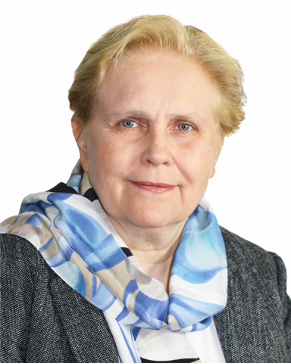
Erik Andersen

Description of Activities

The number of devices in these areas vastly outnumbers the number of human beings and this area is almost unprotected, which could have detrimental effects on our society. It is the hope that the project could be one way to enable a broader cybersecurity protection.

Fellow's country
Impact on SMEs (4th Open Call)
The involved standards are useful so that Europe is involved in this type of cybersecurity, which may affect future EU directives.
Impact on SMEs (8th Open Call)
The extended ITU-T X.510 | ISO/IEC 9594-11 is expected to be an important specification for cryptographic algorithm migration which is essential in the light of future developments of quantum computers. The cryptographic pluck-in capabilities are also important as they will
ease migration, and they will allow different areas of the world to have their own choice of cryptographic algorithms.Moreover, this standard provideslean protocols with a minimum of overhead providing cybersecurity to other protocols (security by simplifications). This in particular important for constrained devices, like IoT devices.
Impact on society (4th Open Call)
Every aspect of cybersecurity has a high priority. Access control needs to be timely in place to prevent unauthorised access.
Impact on society (6th Open Call)
This updated standard will allow users (relying parties) to access certificate information for the whole of Europe and be a significant contributor to the single market. The two priorities selected are cybersecurity and interoperability.
The whole scope of DPKI and the proposed access secure protocols are primarily related to cybersecurity. The proposed access protocol will use robust and trusted cryptographic algorithms to protect the protocols. It is prepared for migration to quantum resistant cryptographic algorithms (crypto agility).
In parallel, any communication protocol is designed for interoperability and the two proposed protocols are no exception. Interoperability is a necessity.
Organisation type
Organization
Independent Expert, Andersen's L-Service
Portrait Picture
Andersen
Proposal Title (1st Open Call)
Second edition of Rec. ITU-T X.510 | ISO/IEC 9594-11
Proposal Title (2nd Open Call)
Key Management and Public-key infrastructure: Establishment and maintenance
Proposal Title (4th Open Call)
Role-based access control for electric power systems
IEC 62351-90-4, Migration of cryptographic algorithms
Proposal Title (6th Open Call)
Revision of ITU-T X.510 | ISO/IEC 9594-11
Proposal Title (8th Open Call)
Third edition of Rec. ITU-T X.510 | ISO/IEC 9594-11, Protocol specifications for secure operations
Role in SDO
Standards Development Organisation
StandICT.eu Year
2026
Year

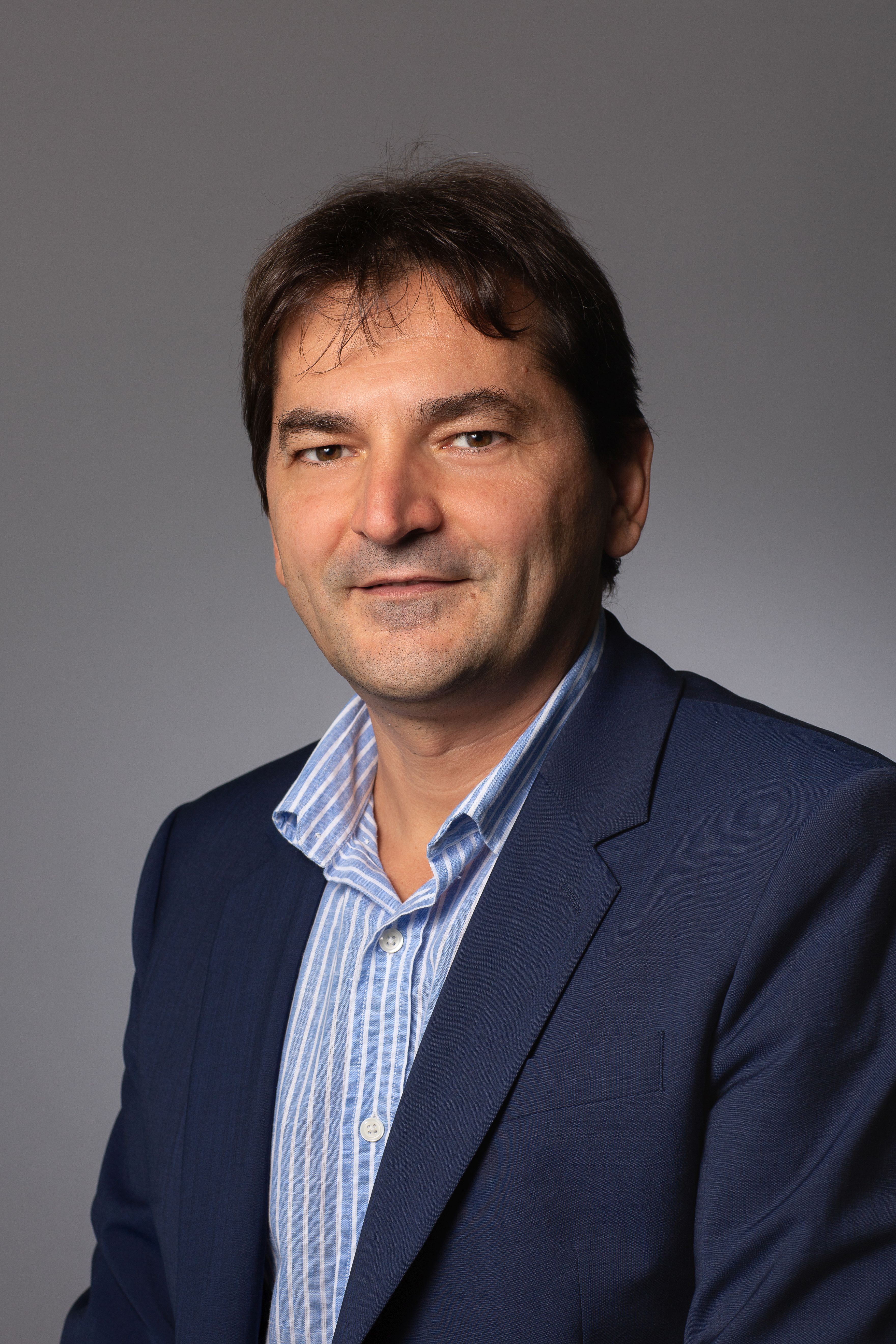
Thierry Maxime

Description of Activities

Work on ICT readiness is essential for organisations facing increasing risks and threats in an unstable environment when they rely more and more on ICT, supplying them guidance to gain more resilience to infrastructures and organisations.

Fellow's country
Open Call
Organisation type
Organization
Information Security Consultant, TRAX
Portrait Picture
Maxime
Proposal Title (2nd Open Call)
Managing last steps ISO/IEC 27031 revision, European experts and liaisons inputs within the project
Standards Development Organisation
StandICT.eu Year
2026
Year

Enrico Panai

Description of Activities

With AI’s evolution, a growing need for AI ethicists to address ethical, social, and psychological queries is evident. One gap, however, lies in the absence of standardised competencies for these professionals, causing hesitation among organisations to embrace AI ethics.

Country
France
Fellow's country
Open Call Topics
Impact on SMEs (1st Open Call)
Establish requirements and ethical guidelines for AI nudging, particularly for vulnerable groups providing requirements, definitions and methodologies that safeguard individual free will, benefiting organisations, and consumers.
Impact on SMEs (2nd Open Call)
The work on ethics helps SME to apply guidelines or choose qualified professionals in the AI ethics field.
Impact on SMEs (4th Open Call)
The ethical standards initiatives are particularly important for SMEs, as they provide the necessary guidance to address the residual uncertainties surrounding AI implementation.
Impact on SMEs (6th Open Call)
The ethical standards initiatives are particularly important for SMEs, as they provide the necessary guidance to address the residual uncertainties surrounding AI implementation. By helping SMEs employ competent ethicists, choose the right tools, and upskill the ethical awareness of developers, these efforts ensure that smaller enterprises can foster responsible innovation.
Impact on SMEs (9th Open Call)
The AI Trustworthiness Framework plays a key role in enabling the effective implementation of the EU AI Act, setting essential standards that help organisations meet legal obligations. Ethical standards are particularly important for SMEs, providing clear guidance to navigate uncertainties in AI adoption. They foster responsible innovation by enabling SMEs to engage qualified ethicists, choose suitable tools, and strengthen ethical awareness. Also, sustainable AI initiatives equip organisations for forthcoming EU environmental requirements, advancing the development of energy-efficient, environmentally responsible AI systems to ensure future regulatory compliance.
Impact on society (1st Open Call)
Using distributed morality mechanisms on multi-agent systems, we aim to mitigate risks and assist the industry in fostering an ethical ecosystem, thereby facilitating the implementation of EU regulatory requirements.
Impact on society (2nd Open Call)
Establishing a uniform language, processes, and ethical methods to regulate their application is paramount to avert unintentional harm and protect vulnerable demographics.
Impact on society (4th Open Call)
The ongoing work on sustainable AI is preparing organizations for compliance with forthcoming EU regulations on environmental sustainability.
CEN CENELEC JTC21 AI WG4 Foundational and societal aspects
ISO/IEC JTC1 SC 42 AI WG3 Trustworthiness
AFNOR ethics committee on AI
Impact on society (6th Open Call)
The development of the AI Trustworthiness Framework is highly significant as it directly supports the implementation of the EU AI Act. This framework establishes essential standards that will enable organisations to meet the legal requirements of the Act. Furthermore, the ongoing work on sustainable AI is preparing organizations for compliance with forthcoming EU regulations on environmental sustainability. These initiatives focus on creating AI systems that are energy-efficient and environmentally responsible, ensuring that businesses are not only able to meet the new regulatory standards.
Impact on society (9th Open Call)
The different targeted standards have a different societal impact:
AI Trustworthiness Framework (prEN 18229): (Part 1 and Part 2) Establishes terminology, concepts, and requirements for AI trustworthiness, addressing five of the ten SRs. Facilitates AI Act compliance and meets varied stakeholder needs.
Environmentally Sustainable AI (JT021010): Cuts AI energy consumption—particularly in neural networks—through more efficient algorithms and pre-trained models, in line with EU climate neutrality targets.
Transparency Taxonomy of AI Systems (JT021022): Creates a structured framework to enhance transparency, accountability, and comparability across AI systems.
Upskilling on AI Ethics (JT021033) & Ethical Management Guidelines (JT021034): Provide tools and guidance to embed ethical and social considerations throughout the AI lifecycle.
Sustainable AI – Guidelines and Metrics (JT021035): Defines KPIs to assess and minimise AI’s environmental impact, promoting sustainable practices.
Impact Assessment and Fundamental Rights (JT021026): Identifies and mitigates risks to fundamental rights, ensuring AI systems align with EU values.
Risk Management in Critical Digital Infrastructure (pending): Delivers tailored methodologies, use cases, and hazard taxonomies to manage AI risks in critical systems, complementing prEN AI Risk Management.
AI-Enhanced Nudging (JT021003): Addresses ethical risks of AI-driven nudges, safeguarding vulnerable groups and preserving public trust.
Competence Requirements for AI Ethicists (JT021019): Defines core skills and knowledge for AI ethicists to ensure effective ethical integration in AI systems.
Organisation type
Organization
AI & Data Ethicist, Sardus France
Portrait Picture
Enrico Panai
Proposal Title (1st Open Call)
Journey Towards Ethical AI: A European Perspective on Nudging, Competence, and Ethics Roadmap
Proposal Title (2nd Open Call)
Navigating AI Ethics: Insights on AI Nudges, AI Competencies, Trust and Ethics Roadmap in EU
Proposal Title (4th Open Call)
The EU Path to AI: AI Trustworthiness, AI Ethics, Green & Sustainability AI, Fundamental Rights
Proposal Title (6th Open Call)
advancing the development of standards within the assigned technical area
Proposal Title (9th Open Call)
The EU Path to AI: AI Trust, AI Ethics, Sustainability AI, Fundamental Rights
Role in SDO
Standards Development Organisation
Topic
Artificial Intelligence
StandICT.eu Year
2026
Year
Topic (1st Open Call)
Topic (2nd Open Call)
Topic (4th Open Call)
Topic (6th Open Call)
Topic (9th Open Call)

Marius Preda

Description of Activities

Interoperability ensures that users can seamlessly navigate and interact within the Metaverse, breaking down barriers between different platforms and ecosystems.

Country
France
Fellow's country
Open Call Topics
Impact on SMEs (7th Open Call)
The proposed standardisation of Gaussian Splat Representations will benefit European SMEs by enabling access to an open, efficient, and high-quality 3D format that can be easily integrated into applications such as virtual product visualization, immersive retail, cultural heritage, and training platforms. By reducing the technical and financial barriers associated with 3D content production, the project fosters innovation in creative industries, education, and digital services.
Impact on society (7th Open Call)
For European society, it supports broader adoption of interoperable and transparent digital tools aligned with the Metaverse and Digital Product Passport strategies.It reinforces MPEG’s strategic role in immersive media representation and supports the creation of open and interoperable formats aligned with European values.
Open Call
Organisation type
Organization
Associate Professor, Telecom SudParis - Institute Mines Telecom
Portrait Picture
Preda
Proposal Title (1st Open Call)
Media Coding and API for Metaverse Interoperability
Proposal Title (7th Open Call)
Next-generation 3D representation for realistic content and interoperability
Standards Development Organisation
Topic
Media Coding and Metaverse
StandICT.eu Year
2026
Year
Topic (1st Open Call)

Jacak Witold

Description of Activities

Standards for basic quantum infrastructures such as quantum information encryption in future quantum networks can support innovation in quantum technology and accelerate its uptake by European SMEs.

Country
Belgium
Fellow's country
Open Call Topics
Impact on SMEs (6th Open Call)
Rapid advancements in quantum computation, communication and a recent surge in QIPC startups are reshaping the landscape for the European innovation. Initiatives like the European Quantum Flagship, alongside global R&D programs, are channeling billions of euros into developing breakthrough quantum solutions. SMEs, long a cornerstone of the European industry, are now poised to harness quantum standards for critical communication infrastructures, including qubit development, advanced encryption, and network interoperability. These standards, including QRNG standards, will further boost state-of-the-art cybersecurity, laying the foundation for a future quantum internet, driving sustainable techno-economic growth, and ensuring that European SMEs and society remain competitive in a rapidly evolving global market.
Impact on SMEs (9th Open Call)
With progress in quantum computation increasing investments are allocated at quantum technologies, including QKD and QIPC. Programs such as the Quantum Flagship in Europe have counterparts globally allocating billions of euros and dollars in R&D. SMEs play a crucial role in development of innovation and with QT it is no exception. Standards for basic quantum infrastructures such as quantum information encryption in future quantum networks can support innovation in quantum technology and accelerate its uptake by European SMEs. This is already happening among multiple startups in Europe, with a lot of their founders and/or key engineers engaging in the standardisation effort of the action with expert cooperation developing.
Impact on society (9th Open Call)
The societal impact of the action is in supporting European’s leading role in quantum technologies. Quantum engineering is expected to revolutionize industry on an unprecedented scale, surpassing technological revolutions witnessed so far.It is important for Europe and its citizens to be at the forefront of these developments as they will define economic and hence societal position of the EU in the future.
European leaders understand potential of quantum technologies and allocate adequate means to support research and development in this domain with programs such as the Quantum Flagship (QF) or the European Quantum Communication Infrastructure (EuroQCI).
Organisation type
Organization
Chair of the Board of Directors & Coordinator of the EITCI Quantum Standards Group, European Information Technologies Certification Institute
Portrait Picture
Witold
Proposal Title (1st Open Call)
Launching generalised quantum cryptography standardisation
Proposal Title (3rd Open Call)
Standards for new on-chip Integrated Circuit Quantum Random Number Generator (ASIC QRNG) devices
Proposal Title (6th Open Call)
Promoting International Standardisation in Quantum Technologies and Quantum Communication
Proposal Title (9th Open Call)
Finalising QRNG standards employing quantum entanglement with secret validation for cryptography
Role in SDO
Standards Development Organisation
Topic
Quantum Technology
StandICT.eu Year
2026
Year
Topic (1st Open Call)
Topic (3rd Open Call)
Topic (6th Open Call)
Topic (9th Open Call)
Richard Pitwon

Description of Activities

This fellowship helped to establish dominant European influence on the first standards for QPICs.

Country
Ireland
Fellow's country
Open Call Topics
Impact on SMEs (4th Open Call)
The formation of a new IEC working group on fibre optic quantum interconnect will align with the technologies of many European SMEs who would benefit from early engagement to develop standards, which help accelerate commercial adoption of their approaches. Therefore, I am strongly engaging with European quantum SMEs to secure support for the proposal and encourage participation. The successful formation of the WG would be followed by the establishment of liaisons to ISO/IEC JTC3 and CEN/CENELEC TC86
Impact on SMEs (6th Open Call)
The formation of IEC TC86 WG11 aligns well with the technologies of many European SMEs who would benefit from early engagement to develop standards, which help accelerate commercial adoption of their approaches. I am strongly engaging with European quantum SMEs to encourage participation from Europe; at the moment, the membership of the group overwhelmingly European (85%).
Impact on SMEs (9th Open Call)
I have built up the membership of this group, which at the time of the final report now has 39 members including 17 members from Europe, which includes some SMEs. The membership is therefore overwhelmingly European (45%).In particular through my fellowship I have consulted with many European quantum and photonic SMEs including Wave Photonics, Bay Photonics and Lumino to actively promote participation through BSI, which is a relatively easy process compared to other European NCs.
Impact on society (4th Open Call)
Europe is already a world-leader in the scientific research and industrialisation of quantum technologies, especially with regards to quantum communication and quantum computation technologies. My fellowship will strengthen European influence on quantum standards and by assuming a strong position on quantum technologies from industrial, academic and standardisation angles, Europe will be in a stronger position to establish a global competitive edge in this field.
Impact on society (6th Open Call)
This activity will strengthen European influence on quantum standards and by assuming a strong position on quantum technologies from industrial, academic and standardisation angles, Europe will be in a stronger position to establish a global competitive edge in this field.
Impact on society (9th Open Call)
European participation and influence in quantum standards groups will be critical to provide a boost across the European supply-chain enabling a larger European quantum market.
The potential benefits to society of quantum networks and quantum computers will be huge. Quantum safe networks will be required to send confidential data securely over appreciable distances and quantum computers will allow impossible world-scale simulations to be carried out in reasonable times.
Europe is already a world-leader in the scientific research and industrialisation of quantum technologies, especially with regards to quantum communication and quantum computation technologies. The key outcome of this fellowship was the successful establishment of IEC TC86 WG11 on Quantum Optical Interconnect as an active and growing Working Group. This new WG11 is strategically critical as its standards will strongly underpin quantum communication and networks, as well as contributing to all other quantum pillars.
By ensuring European SMEs participate actively in this new WG to apply Europe aligned positions on quantum technologies from ethical, industrial and academic angles, European influence on quantum standards will be strengthened and European society will be in a stronger position to establish a global competitive edge in this field.
These areas align well with strengths and expertise in European academic institutions and smaller start-up companies. Thus I have during this fellowship leveraged my extended network to increase involvement of the nascent European quantum industry, drawing primarily on UK. Swiss and EU entities for future support of and contributions to the new working group, thereby establishing strong European influence from the outset. I have successfully grown the membership to 39 members and I expect this to continue to grow rapidly now that we have started developing strategically critical new standards, in particular for quantum grade connectors.
Organisation type
Organization
Consultant - Resolute Photonics UK Ltd
Portrait Picture
pitwon
Proposal Title (1st Open Call)
Standards for Quantum Interconnect and Quantum Photonic Integrated Circuits
Proposal Title (4th Open Call)
Standardisation Working Group for Quantum Interconnect
Proposal Title (6th Open Call)
creation of the new IEC TC86 WG11 - Quantum Optical Interconnect
Proposal Title (9th Open Call)
Building New Standardisation Working Group for Quantum Interconnect
Role in SDO
Standards Development Organisation
Topic
Quantum Technology
StandICT.eu Year
2026
2029
Year
Topic (1st Open Call)
Topic (4th Open Call)
Topic (6th Open Call)
Topic (9th Open Call)
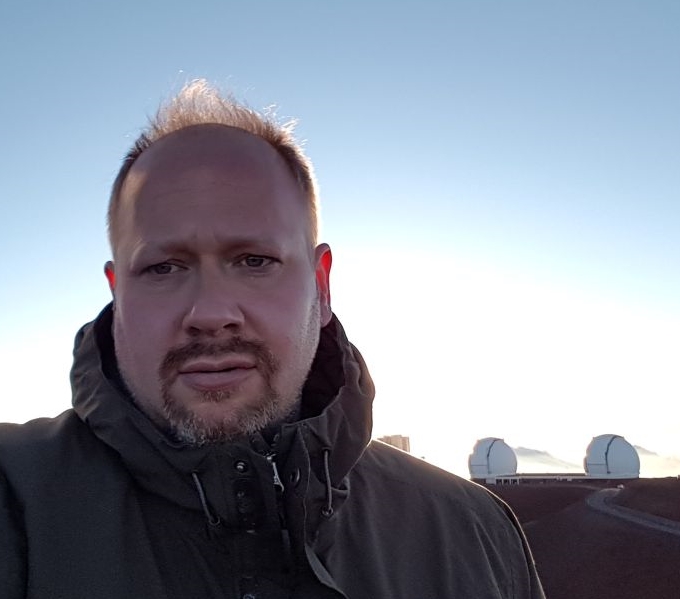
Karim Tobich

Description of Activities

This fellowship is meant to increase confidence in cybersecurity through the convergence of international SDOs and the alignment behind a common international standard which relates both to the market and society.


Country
United Kingdom of Great Britain and Northern Ireland (the)
Fellow's country
Open Call Topics
Impact on SMEs (5th Open Call)
Organisations willing to achieve a resilient cybersecurity system will have to implement an information security management system. The standards developed through this contribution will provide SME and European societies with a comprehensive guidance on how to use ISO/IEC 27001 and ISO/IEC 27002. Moreover, ISO/IEC 27017 will provide SMEs working as Could service providers with a comprehensive list of guidelines to implement when providing services to Could service customers.
Impact on SMEs (7th Open Call)
Organisations willing to achieve a resilient cybersecurity system will have to implement an information security management system. Within that context, this contribution helps organisations of any size including SMEs to achieve better security and cybersecurity through the use of standards like ISO/IEC 27003, ISO/IEC 27028, and ISO/IEC 27004 that will be revised and developed through this work. In addition, this contribution provides technology organisations with a framework to develop and use secure cloud systems ISO/IEC 27017, edge computing systems ISO/IEC 25545 and raise awareness about security and privacy aspects of digital twin systems ISO/IEC 27568 so those concerns can be integrated at an early stage and achieve security and privacy by design when developing such innovative technology.
Impact on SMEs (8th Open Call)
Semiconductor and chip technologies are usually defined and created by large organizations. Nevertheless, European SMEs can be also impacted as those are usually the incubators for new technologies before expanding or getting bought by large organizations.
Impact on society (5th Open Call)
Developing and providing such standards to organisations allow them to implement the EU values and policies in an easy manner.
Impact on society (8th Open Call)
The fellowship enables meeting the European strategy on Chips act and bolster Europe’s competitiveness and resilience in semiconductor technologies and applications, and help achieve both the digital and green transition. In addition it allows for increased convergence of standardisation makers’ efforts achieving EU policy goals by providing a common standard when it comes to EU and international SDO and reducing time for adoption. Developing and providing such standards to organisations allow them to implement the EU values and policies in an easy manner
Organisation type
Organization
Director - Cybersecurity & Technology Consultancy
Portrait Picture
karim
Proposal Title (1st Open Call)
Standards for Information security and cloud service providers
Proposal Title (5th Open Call)
Standards for Information security management, cloud service providers, and digital twins
Proposal Title (7th Open Call)
Standards for Information security management, cloud, edge and digital twin technologies
Proposal Title (8th Open Call)
Semiconductor and trusted chips landscape and gap analysis
Role in SDO
Standards Development Organisation
Topic
Cybersecurity / Cloud Computing
StandICT.eu Year
2026
Topic (1st Open Call)

Julien Bringer

Description of Activities

I estimate that digital identities, and the way to ensure appropriate levels of assurance and handling of corresponding credentials, are key for the digital society.

Country
France
Fellow's country
Open Call Topics
Impact on SMEs (9th Open Call)
Blockchain and Distributed Ledger technologies are developed directly in a global environment and thus the activity impacts EU and SMEs in EU, as for the way EU specificities and regulations (e.g. GDPR, eIDAS, NIS, MiCA) considered as early as possible. Also many SMEs in EU are positioned around security of web 3.0 applications and on decentralized identity and future standards on this matter would be key for procurement.
Impact on society (5th Open Call)
Toward the development of EU-friendly solutions for biometrics-based services, employing strong privacy enhancing technologies, thus going further contractual/organisational requirements, to ensure privacy and security by design. Promoting the use of the newest privacy enhancing technologies is in particular very important (biometric technologies are more and more seen as a way to fight against authentication/identification threats in our digital lives) as sharing or leaking biometric information without appropriate protection can be very critical.
Organisation type
Organization
CEO - Kallistech
Portrait Picture
Bringer
Proposal Title (1st Open Call)
Towards standards convergence for digital identity wallets
Security and privacy of biometrics for remote authentication
Proposal Title (3rd Open Call)
Strengthening security and privacy of biometrics applications through standards
Towards standards convergence for digital identity
Proposal Title (5th Open Call)
Strengthening security and privacy of biometrics applications through standards
Proposal Title (9th Open Call)
Global blockchain and DLT standards on Security, Privacy and Identity
Role in SDO
Standards Development Organisation
Topic
Electronic Identification
StandICT.eu Year
2026
2029
Year
Topic (1st Open Call)
Topic (3rd Open Call)
Topic (5th Open Call)

Thomas Frisendal

Description of Activities

Since graph database technology is a key for meaningful and explainable machine learning and generative AI, it is evident that the GQL standard will have positive impact on applications in our societies.

Country
Denmark
Fellow's country
Open Call Topics
Open Call
Organisation type
Organization
Expert in the ISO 39075 - TF Informatik
Portrait Picture
Frisendal
Proposal Title (1st Open Call)
Danish participation in the ISO/IEC JTC 1/SC 32 WG 3 Database languages (SQL and GQL)
Standards Development Organisation
Topic
Big Data / Open Data / Public Sector Information
StandICT.eu Year
2026
Year
Topic (1st Open Call)

Viveka Bonde

Description of Activities

The focus of this fellowship is to provide additional practices, guidance and information, for identifying, analysing, evaluating and treating societal concerns and ethical considerations of AI.

Country
Sweden
Fellow's country
Open Call Topics
Open Call
Organisation type
Organization
Advokat - Bonde Advokater AB
Portrait Picture
Bonde
Proposal Title (1st Open Call)
Artificial Intelligence – Guidance on addressing societal concerns and ethical considerations
Standards Development Organisation
Topic
Artificial Intelligence
StandICT.eu Year
2026
Year
Topic (1st Open Call)

Rami Mochaourab

Description of Activities

These standards will guide SMEs in effectively implementing and benefiting from the advancements in interactive and multimodal AI, ensuring positive integration into their operations and business strategies.

Country
Sweden
Fellow's country
Open Call Topics
Open Call
Organisation type
Organization
Research Leader - RISE Research Institutes of Sweden
Portrait Picture
Moch
Proposal Title (1st Open Call)
Considerations for Multimodal and Interactive Artificial Intelligence
Standards Development Organisation
Topic
Artificial Intelligence
StandICT.eu Year
2026
Year
Topic (1st Open Call)

Patrick Bezombes

Description of Activities

My work supports AI trustworthiness characteristics such as robustness, human oversight, accuracy, cybersecurity, and transparency (all those are requirements from the AI Act).

Country
France
Fellow's country
Open Call Topics
Impact on SMEs (1st Open Call)
SMEs will be strongly impacted by the future set of harmonised standards in support of the AI Act. One of the aims of the JTC 21 is to provide standards that are innovation-friendly and actionable. Following JTC 21/WG 1 work, a dedicated AHG (AHG 9) has been set up to support SMEs.
Impact on SMEs (4th Open Call)
This project clarifies for SMEs when they use standards related to trustworthiness characteristics, as conformity assessment for those characteristics will be done for defined domains and operating conditions.
Impact on SMEs (8th Open Call)
The future JTC21 harmonized standards will impact every organisations involved in highrisk AI systems and willing to put their product on the EU market. Those future harmonised standards aim also at protecting health, safety and fundamental rights and have therefore an impact on European societies.
Impact on society (1st Open Call)
My work supports AI trustworthiness characteristics such as robustness, human oversight, accuracy, cybersecurity, and transparency (all those are requirements from the AI Act).
Impact on society (4th Open Call)
The impact is potentially significant worldwide, as the European regulation on AI and its subsequent harmonised standards will be followed by any international company that wants to do business in Europe.
Organisation type
Organization
Independent Expert
Portrait Picture
bezombes
Proposal Title (1st Open Call)
AI standardisation roadmapping
Proposal Title (4th Open Call)
Artificial Intelligence - Operational Design Domain for AI systems
Proposal Title (8th Open Call)
AI standardization roadmapping in support of the AI Act standardization request
Role in SDO
Standards Development Organisation
Topic
Artificial Intelligence
StandICT.eu Year
2026
Year
Topic (1st Open Call)
Topic (4th Open Call)