Robotics and autonomous systems

Available (219)

Showing 217 - 219 per page


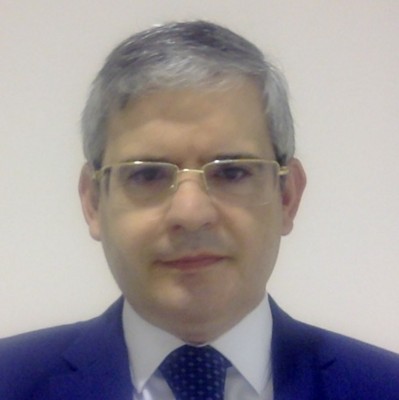
João Manuel Leitão Quintas

Description of Activities

My fellowship aims to contribute to ongoing efforts related to standardisation and European policy, advising on topics related mainly to Robotics and Autonomous Systems and Artificial Intelligence.

Fellow's country
Impact on SMEs (2nd Open Call)
SMEs related to robotics and/or developing artificial agents with a certain degree of autonomy can be impacted by this contribution, as the standard being developed aims to bring added value for integration and interoperability in solutions based on robotic and autonomous systems.
Impact on SMEs (4th Open Call)
SMEs related to robotics and/or developing artificial agents with a certain degree of autonomy can be impacted by this contribution, as the standard being developed aims to bring added value for integration and interoperability in solutions based on robotic and autonomous systems.
Impact on SMEs (8th Open Call)
SMEs related to robotics and/or developing artificial agents with a certain degree of autonomy can be impacted by this contribution, as the standard being developed aims to bring added value for integration and interoperability in solutions based on robotic and autonomous systems.
Impact on SMEs (9th Open Call)
SMEs related to robotics and/or developing artificial agents with a certain degree of autonomy can be impacted by this contribution, as the standard being developed aims to bring added value for integration and interoperability in solutions based on robotic and autonomous systems.
Impact on society (2nd Open Call)
Solutions integrating robotics and autonomous systems that adhere to the standard should result in more interoperable, intelligent, sustainable, and cost-effective technologies, enabling people. to carry out tasks related to personal assistance.
Impact on society (4th Open Call)
One of the direct impacts of my activity is widening the stakeholders' network that can also learn from the standard development and share domain-specific information that is relevant to implement use cases for the standard. It may be of particular interest to the TEF-Health European Project, which is establishing a test and experimentation facilities network across the EU, and I am part of the team and IPN which is leading the Portuguese node.
Impact on society (8th Open Call)
Impact on Society The activity aims to significantly contribute to the development and revision of standards, specifically the newly accepted IEEE P1955, which addresses 6G Empowering Robotics, and IEEE P1872.3, which extends IEEE 1872.2-2021 with specific domain ontologies and new concepts related to artificial intelligence, machine learning, and human-machine interaction. Additionally, it will promote the adoption of existing standards like IEEE 1872.2-2021. This activity will actively engage in the creation and revision of new standards, including developing resources, use cases, and technical documentation that facilitate the adoption and implementation of these standards across various healthcare and technology sectors.
Impact on society (9th Open Call)
This work is supporting the societal impact related to demographic change challenges. Solutions that may adhere to the standard should result in more interoperable, intelligent, sustainable and cost-effective technologies. Additionally, by leveraging the participation of EU experts in global outreach activities and the involvement in worldwide level initiatives contributes to position EU as a top player in the advances of ICT standardization.
Organisation type
Organization
Coordinator of RTD unit - Laboratory of Automatics and Systems, Instituto Pedro Nunes
Portrait Picture
Joao
Proposal Title (2nd Open Call)
Contribution to a new standard for autonomous robotic systems IEEE1872.3
Proposal Title (4th Open Call)
Contribution to new standard for autonomous robotic systems IEEE1872.3
Proposal Title (8th Open Call)
Standardization in Robotics and AI for Healthcare
Proposal Title (9th Open Call)
Extending and reinforcing commitments in Standardization for Robotics and AI for Healthcare
Role in SDO
Standards Development Organisation
StandICT.eu Year
2026
Year
Topic (2nd Open Call)
Topic (4th Open Call)
Topic (9th Open Call)

Amelie Gyrard

Description of Activities

The objective of this fellowship is to include European contributions on viable methodologies on semantic interoperability in ISO standards: ISO SC41 IoT and Digital Twin, with a focus on practical use cases in the domains of health/well-being.

Fellow's country
Impact on SMEs (4th Open Call)
Trialog is a SME so we are directly impacted by my contribution. Trialog was the coordinator of the ACCRA H2020 project (robots for ageing), which is now finished. We follow up with standard activities on robotics. In addition, the standards under consideration will benefit all the Smart Robotics and Internet of Robotic Things ecosystem, including SMEs. SME can develop tools and applications compliant with those standards.
Impact on SMEs (5th Open Call)
Trialog is a SME so we are directly impacted by my contribution. Trialog was the coordinator of the ACCRA H2020 project (robots for ageing) which is now finished. We follow up with standard activities on robotics. In addition, the standards under consideration will benefit all the Smart Robotics and Internet of Robotic Things ecosystem, including SMEs. SME can develop tools, applications compliant with those standards.
Impact on SMEs (7th Open Call)
Trialog is a SME so we are directly impacted by my contribution. In addition, the standards under consideration will benefit all the Smart Health and IoT ecosystem, including SMEs. SME can develop tools, applications compliant with those standards.
Impact on society (4th Open Call)
Accelerating the use of digital twins, as the existence of the semantic repository allows the digital twin to manage semantics while the physical twin is managing data. This methodology will ensure a consistent continuum between the physical twin and the digital twin.
Impact on society (6th Open Call)
The following impacts are identified at a general level:
The Internet of Things (IoT) addresses many societal challenges including climate change, resource and energy efficiency and ageing.
In the emerging IoT economy, voluntary global standards can accelerate adoption, drive competition, and enable cost-effective introduction of new technologies.
Standardisation facilitates the interoperability, compatibility, reliability, security and efficiency of operations on a global scale among different technical solutions, stimulating industry innovation and providing greater clarity to technology evolution.
Interoperability between IoT networks operated by different companies along the value chain opens up opportunities to address EU Policy objectives, e.g. greater resource efficiency for a more circular economy, sustainable and responsible supply chains through transparency and traceability, and others
Impact on society (7th Open Call)
The number of connected devices is expected to exceed 20 billion by 2020. This market will be fostered by proper interoperability standards. Europe is strong in IoT innovation and has made significant technical contributions (AIOTI) including in some specific standardization contexts. AIOTI now has a recognized presence at the ISO level, and it is now key to concretize this presence so that European innovation is well represented.
Organisation type
Organization
Principal Research & Innovation Consultant, Trialog
Portrait Picture
Gerard
Proposal Title (3rd Open Call)
IoT Semantic Interoperability for stress management, good health and well-being
Proposal Title (4th Open Call)
IoT Semantic Interoperability for Internet of Robotic Things
Proposal Title (5th Open Call)
IoT Semantic Interoperability for Active Assisted Living with robots for enhanced well-being
Proposal Title (6th Open Call)
Contribution to the standardization of IoT Interoperability by ensuring integration of SAREF
Proposal Title (7th Open Call)
IoT Semantic Interoperability for health informatics and well-being
Standards Development Organisation
StandICT.eu Year
2026
2029
Year
Topic (3rd Open Call)
Topic (4th Open Call)
Topic (5th Open Call)
Topic (6th Open Call)
Topic (7th Open Call)

Paulo Gonçalves

Description of Activities

In the proposed activity the gaps related to standards will be tackled within three working groups (WG) where I am contributing to: IEEE P1872.3, IEEE P1955 and IEEE P1872.1.1, related to multiple robots, reasoning, 6G for robotics and task representation and planning.

Country
Portugal
Fellow's country
Impact on SMEs (6th Open Call)
The contributions will make significant impact for the description of the robotics requirements on an industrial intralogistics scenario, where robots and humans operate. This will impact robot communication services that will use 6G.
Moreover, the fellowship strongly focuses on ontologies, to achieve a better interoperability of concepts to enhance robot to robot and robot to humans’ communications. The use of the standardizes DOLCE upper ontology makes a significant difference.
Also, EU have within its borders numerous renowned robotics companies. An increasing number of cutting-edge robotics and autonomous systems now rely on AI-driven reasoning to handle their growing complexity. Today, global regulations are shaping how knowledge is represented for robotics services and tasks, and EU SMEs must comply with these standards. As a result, these knowledge representation standards will significantly influence the development of future robotic and autonomous systems.
Impact on SMEs (8th Open Call)
The contributions will make significant impact for the description of the robotics requirements on a healthcare scenario, where robots and humans operate. This will impact robot communication services that will use 6G. Moreover, the fellowship strongly focuses on ontologies, to achieve a better interoperability of concepts to enhance robot to robot and robot to humans’ communications. The use of the standardizes DOLCE upper ontology makes a significant difference. Also, EU have within its borders numerous renowned robotics companies. An increasing
number of cutting-edge robotics and autonomous systems now rely on AI-driven reasoning to handle their growing complexity. Today, global regulations are shaping how knowledge is represented for robotics services and tasks, and EU SMEs must comply with these standards. As a result, these knowledge representation standards will significantly influence the development of future robotic and autonomous systems.
Impact on society (6th Open Call)
The outcomes of this activity are very important for the robotics industry because it tackles concepts very close to real world deployment of robots to perform tasks, autonomously, within a robot group, and/or cooperating and/or collaborating with humans. This is a clear evolution of the IEEE RAS standards portfolio (previously focused on high-level concepts and definitions) and a valuable contribution to the robotics standards landscape in Europe and worldwide.
Organisation type
Organization
Professor - Instituto Politecnico de Castelo Branco
Portrait Picture
Paulo Gonçalves
Proposal Title (1st Open Call)
Standards for Robotics and Autonomous Systems: Knowledge, Reasoning, Multiple Robots and HRI
Proposal Title (3rd Open Call)
Standards for Robotics and Autonomous Systems: Knowledge, Reasoning, and AI for Multiple Robots
Proposal Title (6th Open Call)
Advancing Robotic Interoperability and Explainability through Ontological Standards
Proposal Title (8th Open Call)
Virtual Worlds, 6G, Ethics and AI for Robotics and Autonomous Systems Standards
Role in SDO
Standards Development Organisation
Topic
Robotics and Autonomous Systems
StandICT.eu Year
2026
Year
Topic (1st Open Call)
Topic (3rd Open Call)
Topic (6th Open Call)