ITU-T

Available (16)

Showing 13 - 16 per page


Debora Comparin

Country
France
Fellow's country
Impact on SMEs (7th Open Call)
This standard responds to some requirements outlined in the European Union eIDAS2 regulation and will be implemented by European SMEs and societies active in the EU digital ID wallet ecosystem regulated by eIDAS.
Impact on society (7th Open Call)
The primary gap being addressed is the lack of standardized interfaces for Authentic Sources in the European Digital Identity (EUDI) ecosystem. Despite the legal requirement set out in eIDAS 2.0 (Article 45e) for Authentic Sources to provide such interfaces, there is currently no available specification that defines how these interfaces should be designed or implemented. This gap has been officially recognized in the CEN TC224 WG20 “European Digital Identity Wallets Standards Gap Analysis” and significantly impedes interoperability across Member States.

This fellowship contributes to the enhancement of the ITU-T X.1281 standard, the project supports the creation of secure, trusted, and interoperable mechanisms for verifying attributes from Authentic Sources. This is crucial for the deployment of the EUDI Wallet, a flagship initiative under the Digital Single Market strategy aiming to be available to all EU citizens and residents by 2026.
The key challenges are related to:
Interoperability: The lack of standardization leads to fragmented implementations across Member States, impeding seamless cross-border operations.
Security and Trust: Verifying sensitive personal attributes (like diplomas or driving licenses) requires secure, privacy-preserving, and auditable mechanisms that are hard to implement consistently without a shared standard.
Legal and Technical Fragmentation: Authentic Sources vary widely across jurisdictions in terms of legal frameworks, data models, and technical capacities. A harmonized standard must respect these national differences while ensuring a unified operational framework at the EU level.
Open Call
Organisation type
Organization
Secure Identity Alliance
Portrait Picture
Debora Comparin
Proposal Title (7th Open Call)
Developing Standardized Interfaces for Authentic Sources in the European Digital Identity Ecosystem
Standards Development Organisation
Topic
Artificial Intelligence
StandICT.eu Year
2026
2029
Year

Francesc Wilhelmi

Description of Activities

The adoption of AI in telecommunications systems is expected to foster the investments made not only in connectivity itself, but also in digital infrastructures.

Fellow's country
Open Call Topics
Impact on SMEs (7th Open Call)
AI-native networks can contribute to creating better networks that allow for reducing the digital gap (through pervasive and reliable communications) while being sustainable. As a byproduct of the integration of AI in telecommunications, it is expected that the entrance of new players (e.g., virtual operators, AI experts, over-the-top providers) into the ecosystem will increase the competitiveness of the sector, thus positively impacting the investments in the telecommunications infrastructure.
Impact on society (7th Open Call)
The standardization of AI-native networks would ensure the interoperability principle stated in the Ministerial Declaration of Tallinn.
Open Call
Organisation type
Organization
Universitat Pompeu Fabra (UPF)
Portrait Picture
Francesc Wilhelmi
Proposal Title (7th Open Call)
Towards Trustworthy AI-native Wireless Networks
Standards Development Organisation
StandICT.eu Year
2026
Year
Topic (7th Open Call)

Felix Freitag

Description of Activities

 The objective is to present LoRa mesh networks to the IRTF GAIA WG of the IETF. GAIA seeks technologies to connect the unconnected world, and with IRTF GAIA as a vehicle, we seek to start the standardisation activity of this new technology. 

Country
Spain
Fellow's country
Impact on SMEs (6th Open Call)
The contribution made within this fellowship adds value to the development of LoRa mesh network technology. SMEs may then feel more confident in adopting the technology.
Impact on society (6th Open Call)
The technology provides a permanent low-cost and low-energy routed multi-hop communication network with moderate data rates. LoRa mesh networks allow a new kind of distributed IoT applications in the long range IoT layer. One of the application areas of LoRa mesh networks is the emerging field of distributed embedded machine learning. LoRa mesh networks are not yet standardised. To initialise standardisation, we will introduce the LoRaMesh networks as a design and reference implementation.
Open Call
Organisation type
Organization
Universitat Politecnica de Catalunya
Portrait Picture
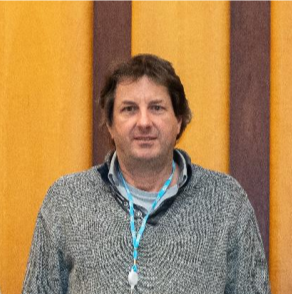
Felix Freitag
Proposal Title (6th Open Call)
Advancing IoT Connectivity: Bringing LoRa Mesh Networks to the IRTF GAIA WG
Standards Development Organisation
Topic
Digital Product Passport
StandICT.eu Year
2026
2029
Year
Topic (6th Open Call)

Marios Angelopoulos

Description of Activities

My work in ITU addresses the priorities of the call pertaining to smart cities and communities, technologies and services for smart and efficient energy use, and citizen centric digital public services and EMC radiation. 

Fellow's country
Impact on SMEs (5th Open Call)
The development of international standards will help provide SMEs, policy makers and regulators with common references thus helping overcome market barriers such as technology fragmentation, thus promoting market growth.
Impact on SMEs (9th Open Call)
ITU-T Q5/20 studies emerging technologies and active work items include topics of high-relevance to European market, such as Digital Product Passports. The development of international standards will help provide European SMEs, policy makers and regulators with common references thus helping overcome market barriers such as technology fragmentation, thus promoting market growth.
Impact on society (5th Open Call)
A clear trend is being formed of moving from vertical energy management that distributes energy in a wired, centralized manner towards more open and distributed architectures adopted close to the edge of the population networks, which among other technologies also utilize the wireless power potential. In this new paradigm, energy will be distributed, shared and managed locally, thus closing the distance between citizens and the available energy sources.
Impact on society (9th Open Call)
The work items of Question 5 of ITU-T Study Group 20 collectively support significant societal impact by advancing the integration of intelligent, sustainable, and transparent digital systems. The development of standards such as the Digital Product Passport for ICT goods (Y.DPP-ICT and YSTR.OS-DPP-ICT) promotes circular economy practices, enabling traceability, sustainability, and responsible consumption. Initiatives like Y.CIP enhance public safety through metaverse-based emergency response systems for chemical industrial parks, leveraging immersive technologies for disaster preparedness and risk management. Frameworks for distributed intelligent computing (YSTR.DIC) and embodied artificial intelligence (YSTR.EAI) contribute to the evolution of smart sustainable cities by enabling efficient resource utilization and human-centric automation. Meanwhile, the Hybrid AI-based Oral Assessment Platform (YSTR.AIOAP) reflects the application of ethical AI in education and skills evaluation. Together, these efforts foster safer, smarter, and more sustainable digital societies aligned with the UN Sustainable Development Goals.
Open Call
Organisation type
Organization
Professor of Networked and Sensing Systems, Bournemouth University
Portrait Picture
marios
Proposal Title (5th Open Call)
Leading the development of ITU standards for IoT and Metaverse in smart cities and communities
Proposal Title (9th Open Call)
Leading the development of ITU standards for IoT and Metaverse in smart cities and communities
Role in SDO
Standards Development Organisation
StandICT.eu Year
2026
Year
Topic (5th Open Call)
Topic (9th Open Call)