Cybersecurity/Network and Information security

Available (191)

Showing 181 - 191 per page


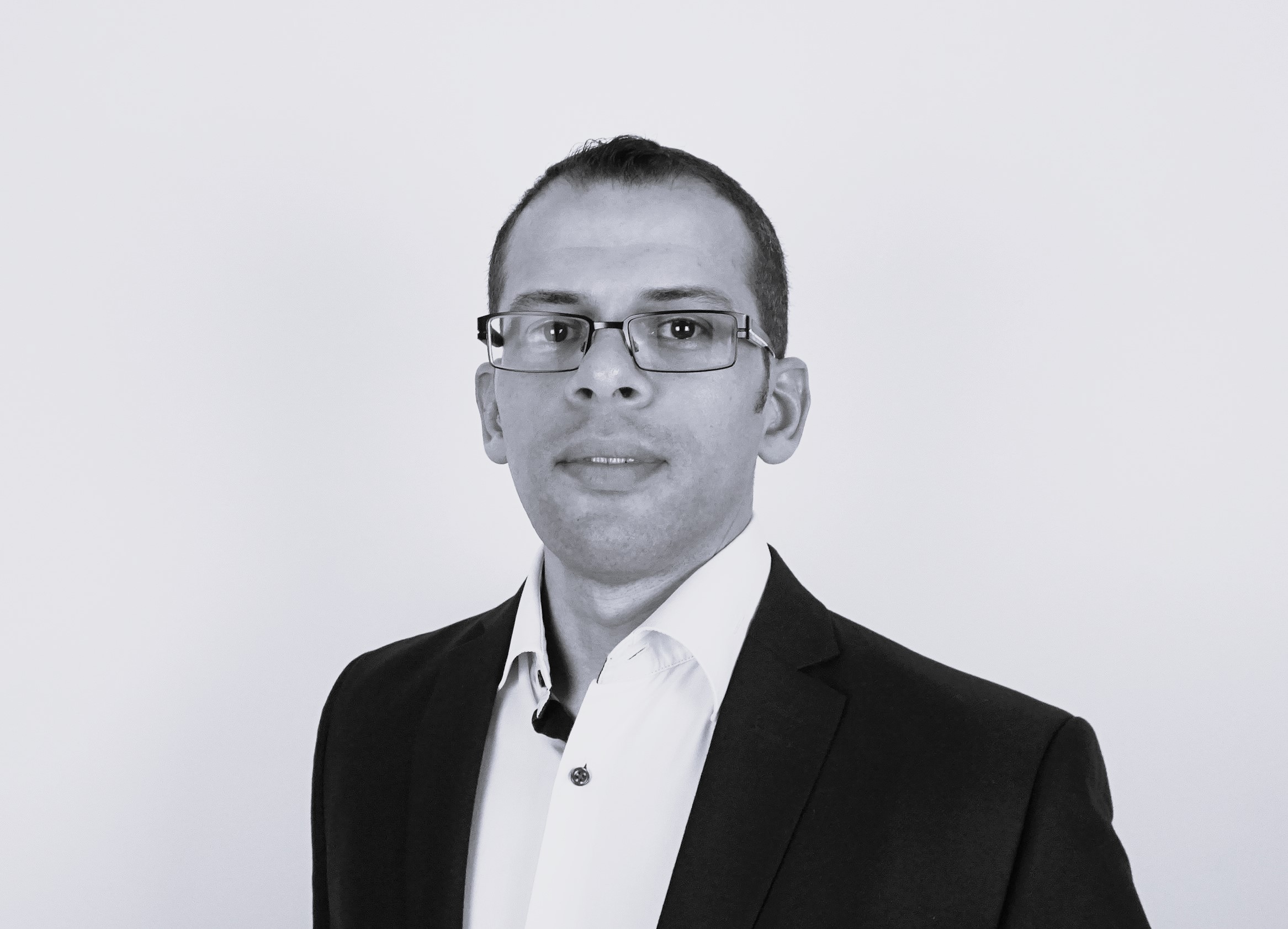
Erik Andersen

Description of Activities

The number of devices in these areas vastly outnumbers the number of human beings and this area is almost unprotected, which could have detrimental effects on our society. It is the hope that the project could be one way to enable a broader cybersecurity protection.

Fellow's country
Impact on SMEs (4th Open Call)
The involved standards are useful so that Europe is involved in this type of cybersecurity, which may affect future EU directives.
Impact on SMEs (8th Open Call)
The extended ITU-T X.510 | ISO/IEC 9594-11 is expected to be an important specification for cryptographic algorithm migration which is essential in the light of future developments of quantum computers. The cryptographic pluck-in capabilities are also important as they will
ease migration, and they will allow different areas of the world to have their own choice of cryptographic algorithms.Moreover, this standard provideslean protocols with a minimum of overhead providing cybersecurity to other protocols (security by simplifications). This in particular important for constrained devices, like IoT devices.
Impact on society (4th Open Call)
Every aspect of cybersecurity has a high priority. Access control needs to be timely in place to prevent unauthorised access.
Impact on society (6th Open Call)
This updated standard will allow users (relying parties) to access certificate information for the whole of Europe and be a significant contributor to the single market. The two priorities selected are cybersecurity and interoperability.
The whole scope of DPKI and the proposed access secure protocols are primarily related to cybersecurity. The proposed access protocol will use robust and trusted cryptographic algorithms to protect the protocols. It is prepared for migration to quantum resistant cryptographic algorithms (crypto agility).
In parallel, any communication protocol is designed for interoperability and the two proposed protocols are no exception. Interoperability is a necessity.
Organisation type
Organization
Independent Expert, Andersen's L-Service
Portrait Picture

Andersen
Proposal Title (1st Open Call)
Second edition of Rec. ITU-T X.510 | ISO/IEC 9594-11
Proposal Title (2nd Open Call)
Key Management and Public-key infrastructure: Establishment and maintenance
Proposal Title (4th Open Call)
Role-based access control for electric power systems
IEC 62351-90-4, Migration of cryptographic algorithms
Proposal Title (6th Open Call)
Revision of ITU-T X.510 | ISO/IEC 9594-11
Proposal Title (8th Open Call)
Third edition of Rec. ITU-T X.510 | ISO/IEC 9594-11, Protocol specifications for secure operations
Role in SDO
Standards Development Organisation
StandICT.eu Year
2026
Year

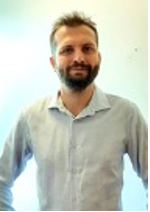
Thierry Maxime

Description of Activities

Work on ICT readiness is essential for organisations facing increasing risks and threats in an unstable environment when they rely more and more on ICT, supplying them guidance to gain more resilience to infrastructures and organisations.

Fellow's country
Open Call
Organisation type
Organization
Information Security Consultant, TRAX
Portrait Picture
Maxime
Proposal Title (2nd Open Call)
Managing last steps ISO/IEC 27031 revision, European experts and liaisons inputs within the project
Standards Development Organisation
StandICT.eu Year
2026
Year

Karim Tobich

Description of Activities

This fellowship is meant to increase confidence in cybersecurity through the convergence of international SDOs and the alignment behind a common international standard which relates both to the market and society.


Country
United Kingdom of Great Britain and Northern Ireland (the)
Fellow's country
Open Call Topics
Impact on SMEs (5th Open Call)
Organisations willing to achieve a resilient cybersecurity system will have to implement an information security management system. The standards developed through this contribution will provide SME and European societies with a comprehensive guidance on how to use ISO/IEC 27001 and ISO/IEC 27002. Moreover, ISO/IEC 27017 will provide SMEs working as Could service providers with a comprehensive list of guidelines to implement when providing services to Could service customers.
Impact on SMEs (7th Open Call)
Organisations willing to achieve a resilient cybersecurity system will have to implement an information security management system. Within that context, this contribution helps organisations of any size including SMEs to achieve better security and cybersecurity through the use of standards like ISO/IEC 27003, ISO/IEC 27028, and ISO/IEC 27004 that will be revised and developed through this work. In addition, this contribution provides technology organisations with a framework to develop and use secure cloud systems ISO/IEC 27017, edge computing systems ISO/IEC 25545 and raise awareness about security and privacy aspects of digital twin systems ISO/IEC 27568 so those concerns can be integrated at an early stage and achieve security and privacy by design when developing such innovative technology.
Impact on SMEs (8th Open Call)
Semiconductor and chip technologies are usually defined and created by large organizations. Nevertheless, European SMEs can be also impacted as those are usually the incubators for new technologies before expanding or getting bought by large organizations.
Impact on society (5th Open Call)
Developing and providing such standards to organisations allow them to implement the EU values and policies in an easy manner.
Impact on society (8th Open Call)
The fellowship enables meeting the European strategy on Chips act and bolster Europe’s competitiveness and resilience in semiconductor technologies and applications, and help achieve both the digital and green transition. In addition it allows for increased convergence of standardisation makers’ efforts achieving EU policy goals by providing a common standard when it comes to EU and international SDO and reducing time for adoption. Developing and providing such standards to organisations allow them to implement the EU values and policies in an easy manner
Organisation type
Organization
Director - Cybersecurity & Technology Consultancy
Portrait Picture
karim
Proposal Title (1st Open Call)
Standards for Information security and cloud service providers
Proposal Title (5th Open Call)
Standards for Information security management, cloud service providers, and digital twins
Proposal Title (7th Open Call)
Standards for Information security management, cloud, edge and digital twin technologies
Proposal Title (8th Open Call)
Semiconductor and trusted chips landscape and gap analysis
Role in SDO
Standards Development Organisation
Topic
Cybersecurity / Cloud Computing
StandICT.eu Year
2026
Topic (1st Open Call)

Julien Bringer

Description of Activities

I estimate that digital identities, and the way to ensure appropriate levels of assurance and handling of corresponding credentials, are key for the digital society.

Country
France
Fellow's country
Open Call Topics
Impact on SMEs (9th Open Call)
Blockchain and Distributed Ledger technologies are developed directly in a global environment and thus the activity impacts EU and SMEs in EU, as for the way EU specificities and regulations (e.g. GDPR, eIDAS, NIS, MiCA) considered as early as possible. Also many SMEs in EU are positioned around security of web 3.0 applications and on decentralized identity and future standards on this matter would be key for procurement.
Impact on society (5th Open Call)
Toward the development of EU-friendly solutions for biometrics-based services, employing strong privacy enhancing technologies, thus going further contractual/organisational requirements, to ensure privacy and security by design. Promoting the use of the newest privacy enhancing technologies is in particular very important (biometric technologies are more and more seen as a way to fight against authentication/identification threats in our digital lives) as sharing or leaking biometric information without appropriate protection can be very critical.
Organisation type
Organization
CEO - Kallistech
Portrait Picture
Bringer
Proposal Title (1st Open Call)
Towards standards convergence for digital identity wallets
Security and privacy of biometrics for remote authentication
Proposal Title (3rd Open Call)
Strengthening security and privacy of biometrics applications through standards
Towards standards convergence for digital identity
Proposal Title (5th Open Call)
Strengthening security and privacy of biometrics applications through standards
Proposal Title (9th Open Call)
Global blockchain and DLT standards on Security, Privacy and Identity
Role in SDO
Standards Development Organisation
Topic
Electronic Identification
StandICT.eu Year
2026
2029
Year
Topic (1st Open Call)
Topic (3rd Open Call)
Topic (5th Open Call)

Alex Cadzow

Description of Activities

In addressing secure AI with the broad interpretation of security to include safety and societal aspects as above TC SAI will engage with EU and other regulatory bodies to ensure that the output supports relevant global, regional, and national requirements.

Country
United Kingdom of Great Britain and Northern Ireland (the)
Fellow's country
Impact on SMEs (9th Open Call)
Due to the one-shot type of this fellowship, there were limited achieved contributions. These included successful attendance and Chairing of the session Digital Sovereignty and Societal Impact, are we in the age of the Splinternet?
Organisation type
Organization
Senior Cybersecurity and Human Factors Researcher - Cadzow Communications Consulting Ltd
Portrait Picture
cadzow
Proposal Title (1st Open Call)
Support as Secretary for ETSI ISG SAI
Proposal Title (2nd Open Call)
Support to publication ETSI CYBER WI: Design practices against technology-enabled coercive control
Proposal Title (9th Open Call)
Travel Support as a Session Chair for ETSI Security Conference 2025
Standards Development Organisation
Topic
Artificial Intelligence
StandICT.eu Year
2026
Year
Topic (1st Open Call)
Topic (2nd Open Call)

Jordi Mongay Batalla

Description of Activities

This fellowship aims to contribute to the O-RAN Alliance Security Tests specification, the main standard, bringing a security assurance methodology for all O-RAN equipment.

Country
Poland
Fellow's country
Open Call
Organisation type
Organization
Associate Professor, Security Expert, Warsaw University of Technology
Portrait Picture
batalla
Proposal Title (1st Open Call)
O-RAN infrastructure evaluation tests
Topic
Network and Information Security
StandICT.eu Year
2026
Year

Thomas Loruenser

Description of Activities

The proposal at hand is expected to directly contribute to increasing the real-world take up of advanced privacy-enhancing technologies, thereby advancing the technical state of the art in this domain and helping to maintain the privacy and data sovereignty of European SMEs and ultimately also citizens.

Country
Austria
Fellow's country
Impact on SMEs (5th Open Call)
In addition, a significant number of European SMEs working on the commercialisation of MPC and PETs in general will benefit from the results of the project.
Impact on society (5th Open Call)
The work is expected to directly contribute to increasing the real-world uptake of advanced privacy-enhancing technologies, thereby advancing the state of the art in this area and helping to preserve the privacy and data sovereignty of European SMEs and ultimately citizens.
Open Call
Organisation type
Organization
Independent Expert
Portrait Picture
Loruenser
Proposal Title (1st Open Call)
Standardisation of multiparty computation in ISO/IEC JTC1 SC27 WG2
Proposal Title (5th Open Call)
Support for Standardization of Secure Computing Methods
Standards Development Organisation
Topic
Network and Information Security
StandICT.eu Year
2026
Year

Octavian Popescu

Description of Activities

Clarifying for the EU SMEs and European societies the direction they would have to take to evolve and change their product, ensuring their compliance with the regulatory obligations activated in the RED Delegated Act.

Country
Belgium
Fellow's country
Impact on SMEs (2nd Open Call)
I am contributing to work on cybersecurity evaluation industry protocols, and it is important for SMEs that protocols are based on published harmonised EN standards, so that they can be used by the radio communications equipment manufacturers and all other stakeholders to evaluate their equipment for the purpose of legal compliance to the cybersecurity requirements and therefore ultimately to improve their response to threats.
Impact on SMEs (5th Open Call)
By its nature, the CRA covers all products with digital elements, and therefore, all supply chain segments are in it, including SMEs, and the European SMEs and societies are at the forefront. A successful and clear standardisation deliverable is the outcome of this standardisation process.
Impact on society (2nd Open Call)
While the society at large is not aware of the work done in this or most fields of expertise, the overall objective is to improve the way end-users communicate via their internet connected devices.
Impact on society (5th Open Call)
In this spirit, the CRA-related standardisation work produces instructions for manufacturers of devices with digital elements explaining that they will now have to include technical features to improve the level of cybersecurity of such devices before placing them on the European market.
Organisation type
Organization
Consultant, Reseacher - EUCOMREG
Portrait Picture
Popescu
Proposal Title (1st Open Call)
Proposal for requirement regarding the elimination of publicly known exploitable vulnerabilities
Participation in the development of standardisation work in support of RED Articles 3(3) (d/e/f)Participation in the development of standardisation work in support of RED Articles 3(3) (d/e/f)
Proposal Title (2nd Open Call)
Participation in the standardisation work at the ESOs for the Cyber Resilience Act proposal
Proposal Title (5th Open Call)
Participation in the standardisation work at the ESOs for the Cyber Resilience Act proposal
Standards Development Organisation
Topic
Network and Information Security
StandICT.eu Year
2026
Year

Jan Lindquist

Description of Activities

SME’s will be encouraged to build services on the wallet when there are key benefits for wallet holder focusing on privacy and security when sharing personal data.

Country
Sweden
Fellow's country
Impact on SMEs (6th Open Call)
My work has a direct impact on European SMEs and society. By contributing to standards like ISO/IEC 27560 and the EUDI Wallet Access Control in CEN TC224/WG20, I help create practical, privacy-focused frameworks that SMEs can adopt with minimal cost and complexity. These standards enable GDPR-compliant consent, transparency, and data minimization, reducing legal risk and building user trust.
Impact on SMEs (9th Open Call)
My work simplifies GDPR compliance for European SMEs by developing standards that make privacy receipts and access control both practical and cost-effective. By embedding lawful bases and user-facing transparency into consent and data access records, SMEs can demonstrate accountability while reducing legal risk. For society, this promotes stronger digital rights, user agency, and trust in the EUDI Wallet ecosystem.
Impact on society (6th Open Call)
In terms of broader European interests, my fellowship contributes to EU goals of digital sovereignty, user empowerment, and privacy leadership on the global stage. As the EUDI wallet is adopted across Europe, this framework will provide a scalable model for data protection and user-centric identity management that can be extended beyond digital wallets to other data-sharing contexts, enhancing Europe’s role as a privacy leader. With data privacy becoming a key competitive factor, this initiative not only strengthens the protection of EU citizens’ rights but also sets a high standard for digital identity solutions globally.
Impact on society (9th Open Call)
My work supports fundamental societal values by helping define how citizens can safely and transparently share their personal data through the European Digital Identity (EUDI) Wallet. At the heart of this is the development of access control standards that ensure individuals are not just passive data subjects, but active participants who can decide what data is shared, with whom, under what conditions, and for what declared purpose.
By enabling these controls through enforceable, machine-readable policies, the standard empowers users to exercise real agency over their digital identity—moving beyond consent screens toward meaningful privacy protections embedded in the architecture of the wallet itself. This aligns with the EU’s commitment to privacy, data minimisation, and purpose limitation under the GDPR.
The work also supports societal inclusion by ensuring that access control mechanisms are transparent and usable, helping citizens understand their rights and obligations, while also simplifying compliance for service providers. The inclusion of ISO/IEC 27560 in this framework ensures that all lawful bases for processing—not just consent—are clearly documented and traceable, which is especially important for use cases like healthcare, education, or public services.
Importantly, the open availability of ISO/IEC 27560 as a free standard lowers the barrier for adoption, supporting uptake by public administrations, SMEs, and civil society. This ensures that privacy-enhancing technologies are not limited to large commercial actors, but can benefit all layers of European society.
Overall, this work contributes to a more trustworthy, transparent, and citizen-centric digital identity ecosystem—one that upholds European values while supporting innovation, cross-border interoperability, and regulatory alignment.
Organisation type
Organization
Linaltec AB
Portrait Picture
Lindquist
Proposal Title (1st Open Call)
Consent records and privacy principles in eIDAS2 wallet
Proposal Title (3rd Open Call)
EUDI Wallet (eIDAS2) held personal data access control
Proposal Title (6th Open Call)
This fellowship directly contributes to strengthening the ICT Standards landscape in two key areas: digital identity access control and lawful data processing under GDPR
Proposal Title (9th Open Call)
EUDI Wallet (eIDAS2) held personal data access control
Standards Development Organisation
Topic
E-privacy
StandICT.eu Year
2029
Year
Topic (1st Open Call)
Topic (6th Open Call)

Robert Mueller

Description of Activities

The main challenge is that some industry players dominate national bodies and want to promote their own product by making contributions to the industry standard.

Country
Germany
Fellow's country
Impact on SMEs (2nd Open Call)
Standardised biometric data formats enable interoperability and exchanging system components like biometric capture devices, algorithms, storage systems. This is of relevance for SMEs who typically provide only a single component rather than an entire solution like industry leading large corporations – which sometimes may rely on proprietary data formats.
Impact on SMEs (4th Open Call)
SMEs who typically provide only a single component rather than an entire solution like industry leading large corporations – which sometimes may rely on proprietary data formats.
Impact on SMEs (5th Open Call)
The interoperability achieved with this standard helps particularly SMEs who typically provide only a single component to a BSoC while larger corporations could provide an entire solution which may be proprietary.
Impact on SMEs (7th Open Call)
The standard promotes Biometric System-on-Card architecture, characteristics and interfaces. It is a technology that improves security and privacy for citizens in Europe and beyond, because personal data remains on a personal card. The interoperability achieved with this standard helps particularly SMEs who typically provide only a single component to a BSoC while larger corporations could provide an entire solution which may be proprietary.
Impact on society (2nd Open Call)
Biometric user authentication is present in many applications, including not only smartphone usage but also banking, national ID, healthcare and border management. Citizens in Europe and beyond benefit from the use of open standards in civil and governmental applications allowing transparency, privacy and guaranteed level of service.
Impact on society (4th Open Call)
Standardised biometric data formats enable interoperability and exchanging system components like biometric capture devices, algorithms, storage systems
Impact on society (5th Open Call)
The standard promotes Biometric System-on-Card architecture, characteristics and interfaces. It is a technology that improves security and privacy for citizens in Europe and beyond, because personal data remains on a personal card.
Impact on society (7th Open Call)
Technology for Biometric System-on-Card (BSoC) has advanced significantly since the first publication of the ISO/IEC 17839 series from 2014-2016. This made an amendment of part 2 necessary in 2021 and a revision started 2022/2023. The major gaps are that the currently published standards partially refer to outdated technology and do not cover many recent industry developments in the field of BSoC. This includes enrolment methodologies, sensor and card manufacturing, but also processes and usage of biometric cards. The priority is to consider all inputs from national bodies, come to a consensus and progress the standard series according to the ISO business plan. Challenges are divers inputs from industry delegates targeting different solutions. It is important to include all contributions from national bodies while keeping the timeline mandated by the ISO business plan.
Organisation type
Organization
Dr. Robert Mueller IT Consulting
Portrait Picture
mueller
Proposal Title (1st Open Call)
Advance Biometric System-on-Card standard series ISO/IEC 17839
Proposal Title (2nd Open Call)
Progress Extensible Minuitiae Standard ISO/IEC 39794-2
Proposal Title (3rd Open Call)
Advance Biometric System-on-Card standard series ISO/IEC 17839
Proposal Title (4th Open Call)
Develop Amendment to extensible minutiae standard ISO/IEC 39794-2
Proposal Title (5th Open Call)
Advance Biometric System-onCard standard series
Proposal Title (7th Open Call)
Advance ISO/IEC 17839 Biometric System-on-Card standard series
Role in SDO
Standards Development Organisation
Topic
Cybersecurity
StandICT.eu Year
2026
2029
Year

Christophe Stenuit

Description of Activities

I am to positively influence the European market and its infrastructures by benefiting from international contributions (e.g. ISO/IEC) in the controlling of civil security and the protecting of e-identity and e-privacy.

Country
Belgium
Fellow's country
Impact on SMEs (2nd Open Call)
Recent EU GDPR, eIDA2 regulations and NIS-2 directives developments impose a different view on IT risks, information security, data privacy protection and identity management controls, and by this a different awareness of the consequences that may fall improper compliance to good practices. Therefore, good standard references help establish confidence and maturity improvement in yesterday's matters.
Impact on SMEs (6th Open Call)
SME are better aware of risks and of controls required in IT and information protection. Recent EU GDPR, eIDA2 regulation, DORA, and NIS-2 directives developments impose a different view on IT risks, information security, data privacy protection and identity management controls, and by this a different awareness of the consequences that may fall down improper compliance to good practices. Good standard references help confidence establishment and maturity improvement in matter yesterday far from SMEs' concerns.
Impact on SMEs (7th Open Call)
SME are better aware of risks and of controls required in IT and information protection. Recent EU GDPR, eIDA2 regulation, DORA, and NIS-2 directives developments impose a different view on IT risks, information security, data privacy protection and identity management controls, and by this a different awareness of the consequences that may fall down improper compliance to good practices. Good standard references help confidence establishment and maturity improvement in matters yesterday far from SMEs' concerns.
Impact on SMEs (8th Open Call)
SME are better aware of risks and of controls required in IT and information protection. Recent EU GDPR, eIDA2 regulation, DORA, and NIS-2 directives developments impose a different view on IT risks, information security, data privacy protection and identity management controls, and by this a different awareness of the consequences that may fall down improper compliance to good practices. Good standard references help confidence establishment and maturity improvement in matter yesterday far from SMEs’ concerns.
Impact on society (2nd Open Call)
Christophe's Fellowship protects freedom and security of Europe and its citizens. Standards on reference architectures around e-identity and e-privacy management ensure protocols are in place to protect citizens and societies from cybersecurity and network threats. Finally, data protection good practice ensures any risk on identity information is mitigated uduring information processing.
Impact on society (6th Open Call)
This activity impacts the societal challenges in three key areas:
Secure societies - protecting freedom and security of Europe and its citizens: Supporting standards on e-identity and e-privacy information management ensures identity information lifecycle, identification, bound proofed identity information and authentication of citizen and societies are in place before authorized accesses to services is provided without compromising their privacy;
Cybersecurity, network and identity information security: Standards on reference architectures around e-identity and e-privacy management ensure information infrastructure has the required controls in place to protect citizen and societies while accessing and using provided services;
ePrivacy protection: Data protection good practice ensures any risk on identity information is mitigate during the processing of the information.
Impact on society (7th Open Call)
This work has societal impact at least on three axes, including:
Secure societies - protecting freedom and security of Europe and its citizens: Supporting standards on e-identity and e-privacy information management ensures identity information lifecycle, identification, bound proofed identity information and authentication of citizens and societies are in place before authorized accesses to services is provided without compromising their privacy;
Cybersecurity, network and identity information security: Standards on reference architectures around e-identity and e-privacy management ensure information infrastructure has the required controls in place to protect citizens and societies while accessing and using provided services;
ePrivacy protection: Data protection good practice ensures any risk on identity information is mitigated during the processing of the information.
Organisation type
Organization
Viewconcept.be
Portrait Picture
stenuit
Proposal Title (1st Open Call)
Contribution to e-identification and e-authentication at CEN/CLC/JTC 13 and ISO/IEC JTC1/SC 27 WG5’s
Proposal Title (2nd Open Call)
ntribution to e-identification and e-authentication at CEN/CLC/JTC 13 & ISO/IEC JTC1/SC 27 WG5’s
Proposal Title (3rd Open Call)
Contribution to e-identification and e-authentication at CEN/CLC/JTC 13 & ISO/ IEC JTC1/SC 27 WG5’s
Proposal Title (5th Open Call)
Contribution to e-identification and e-authentication at CEN/CLC/JTC 13 & ISO/IEC JTC1/SC 27 WG5’s
Proposal Title (6th Open Call)
contribute to a better harmonization of e-identity and privacy protection standardization support in Europe
Establishment of a Liaison Statement of ISO/IEC JTC 1/SC 27 WG 5 to CEN-CENELEC JTC13.
Contribution to the definition of AG5 on strategy as part of the ISO JTC1 SC27 WG5
Proposal Title (7th Open Call)
Contribution to e-identification and e-authentication at CEN/CLC/JTC 13 & ISO/IEC JTC1/SC 27 WG5’s
Proposal Title (8th Open Call)
Contribution to e-identification and e-authentication at CEN/CLC/JTC 13 & ISO/IEC JTC1/SC 27 WG5’s
Standards Development Organisation
Topic
Cybersecurity
StandICT.eu Year
2026
Year