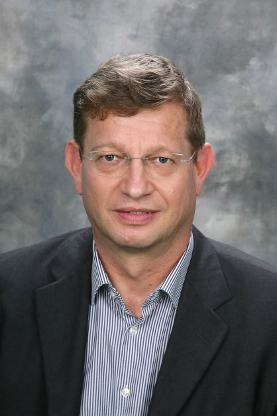
Anita Prinzie
Description of Activities
The AI Act is a European regulation promoting the uptake of human-centric and trustworthy AI, while ensuring protection of health, safety, and fundamental rights. Companies can prove conformity with the AI Act by complying with the 10 harmonised standards drafted by CEN-CENELEC. My fellowship contributes to two harmonised standards supporting the AI Act.
Country
Belgium
Fellow's country
Open Call Topics
Impact on SMEs (4th Open Call)
I review and contribute to the prEN AI Trustworthiness Framework and prEN AI Risk Management accounting for the SME inclusiveness of the requirements. I want to enable SMEs to provide and/or deploy trustworthy AI systems while controlling AI risks taking into account their modest resources as compared to enterprises.
Impact on SMEs (5th Open Call)
The standards in general enable responsible yet affordable innovation with fast launch to market for all companies including SMEs: ensuring concrete requirements that can be integrated in existing trustworthy AI and risk management processes and day-to-day business operations.
Impact on SMEs (7th Open Call)
The EN AI Trustworthiness Framework and the EN AI Risk Management support European companies, including both SMEs and large enterprises, develop and use trustworthy AI systems that comply with the AI Act in a practical way, while still supporting profitable innovation. Furthermore, I review and contribute to the prEN AI Trustworthiness Framework and prEN AI Risk Management accounting for the SME inclusiveness of the requirements. I want to enable SMEs to provide and/or deploy trustworthy AI systems while controlling AI risks taking into account their modest resources as compared to enterprises.
Impact on society (4th Open Call)
The prEN AI Trustworthiness Framework Standard specifies trustworthiness requirements aligned with European culture and society. Whereas, the prEN AI System Risk Management standard enables to control risks not only on the individual and company level but also on the level of the society.
Impact on society (5th Open Call)
EN AI Trustworthiness Framework provides requirements for trustworthy AI systems that align with European stakeholders and regulation and European values. Enable the design and management of trustworthy AI systems that proactively respect European norms and values and fundamental rights.
Impact on society (7th Open Call)
My fellowship contributes to the following societal impact within the two standardisation projects:
Firstly, EN AI Trustworthiness Framework provides requirements for trustworthy AI systems that align with European stakeholders and regulation and European values. Enable the design and management of trustworthy AI systems that proactively respect European norms and values and fundamental rights. It also indicates the need for holistic risk management taking into account the risks to users and society. The requirements for logging, transparency, human oversight, accuracy and robustness account for managing the risks to affected users and society at large.
Secondly, The EN AI Risk Management standard enables us to control risks not only on the individual level but also on the level of the society (e.g., misinformation and disinformation risks, risks to democratic processes, …). The scope of the standard indicates that risks covered include both risks to health and safety and risks to fundamental rights which can arise from AI systems, with impact for individuals, organisations, market and society. The risk policy (section 5.1.2), the risk management plan (section 5.1.4), the risk evaluation (section 5.2.1.4) specify requirements on consultation with potentially affected stakeholders (or their proxies, including civil society organisations). The implementation and verification of risk control measures (section 5.2.2.2) and the evaluation of residual risk (section 5.2.3) refer to the test of necessity and proportionality in a democratic society, for risks pertaining to a potential interference with a fundamental right that permits qualifications.
Firstly, EN AI Trustworthiness Framework provides requirements for trustworthy AI systems that align with European stakeholders and regulation and European values. Enable the design and management of trustworthy AI systems that proactively respect European norms and values and fundamental rights. It also indicates the need for holistic risk management taking into account the risks to users and society. The requirements for logging, transparency, human oversight, accuracy and robustness account for managing the risks to affected users and society at large.
Secondly, The EN AI Risk Management standard enables us to control risks not only on the individual level but also on the level of the society (e.g., misinformation and disinformation risks, risks to democratic processes, …). The scope of the standard indicates that risks covered include both risks to health and safety and risks to fundamental rights which can arise from AI systems, with impact for individuals, organisations, market and society. The risk policy (section 5.1.2), the risk management plan (section 5.1.4), the risk evaluation (section 5.2.1.4) specify requirements on consultation with potentially affected stakeholders (or their proxies, including civil society organisations). The implementation and verification of risk control measures (section 5.2.2.2) and the evaluation of residual risk (section 5.2.3) refer to the test of necessity and proportionality in a democratic society, for risks pertaining to a potential interference with a fundamental right that permits qualifications.
Linkedin Profile
Organisation type
Organization
Omina Technologies
Organization website
Portrait Picture

Proposal Title (4th Open Call)
Trustworthy AI and AI Risk Management expertise for EU AI Act harmonized standards
Proposal Title (5th Open Call)
Contribution to AI Trustworthiness Framework and AI System Risk Management EN standards for AI Act
Proposal Title (7th Open Call)
Full AI Act harmonization of AI Trustworthiness Framework and AI System Risk Management standards
Read more
Standards Development Organisation
StandICT.eu Year
2026
2029
Topic (5th Open Call)
Topic (7th Open Call)