Big Data & Open data

Available (36)

Showing 25 - 36 per page


Big data - framework and requirements for data exchange

Recommendation ITU-T Y.3601 provides a framework for data exchange in a big data ecosystem. Big data exchange covers multiple processes for data import and data export within a big data ecosystem. Big data exchange is used for exchanging data of multiple types and multiple formats from a data source to a data target.

ITU-T Y.3601 (05/2018)

Big-data-driven networking - mobile network traffic management and planning

In a mobile network, a great deal of traffic data which reflects the real status of the mobile network and customers' actual experience is generated all the time. Based on the big data generated from the mobile network more efficient management and reasonable planning of mobile networks can be achieved.

ITU-T Y.3651 (12/2018)

Big data – Cloud computing based requirements and capabilities

Recommendation Y.3600 provides requirements, capabilities and use cases of cloud computing based big data as well as its system context. Cloud computing based big data provides the capabilities to collect, store, analyze, visualize and manage varieties of large volume datasets, which cannot be rapidly transferred and analysed using traditional technologies.

ITU-T Y.3600 (11/2015)

Security requirements and framework for big data analytics in mobile Internet services

Mobile Internet services harvest data in their big data infrastructure from multiple sources and multiple data dimensions with characteristics including scale, diversity, speed and possibly others like credibility or business value. Big data analysis drives nearly every aspect of mobile Internet services to improve service quality and user experience.

ITU-T X.1147 (11/2018)

Specific requirements and capabilities of the Internet of things for big data

The purpose of this Recommendation is to specify requirements and capabilities of the IoT for Big Data. This Recommendation complements the developments on common requirements of the IoT [ITU-T Y.2066] and functional framework of the IoT [ITU-T Y.2068] in terms of the specific requirements and capabilities that the IoT is expected to support in order to address the challenges related to Big Data. Also, it constitutes a basis for further standardization work (e.g. functional entities, APIs and protocols) concerning Big Data in the IoT.

ITU-T Y.4114 (07/2017)

High-level requirements and reference framework of smart city platforms

This draft Recommendation presents the high-level requirements and reference framework of Smart City Platform (SCP). The SCP is a fundamental platform supporting all the services and applications of a smart city, with the objective to improve quality of life, provide urban operation and services for the benefit of the citizens while ensuring city sustainability.

ITU-T Y.4201 (02/2018)

Big data - Functional requirements for data provenance

Recommendation ITU‑T Y.3602 describes a model and operations for big data provenance. Also, this Recommendation provides the functional requirements for big data service provider (BDSP) to manage big data provenance. The reliability of data is an important factor in determining the reliability of the analysis result. Data provenance aims to ensure the reliability of data by providing transparency of the historical path of the data. In a big data environment, complex data processing and migration due to the big data lifecycle and data distribution cause various difficulties in managing data provenance.

ITU-T Y.3602 (12/2018)

Network Functions Virtualisation (NFV) Release 2; Protocols and Data Models; VNF Package specification

The present document specifies the structure and format of a VNF package file and its constituents, fulfilling the requirements specified in ETSI GS NFV-IFA 011 [1] for a VNF package.

ETSI GS NFV-SOL 004 V2.6.1

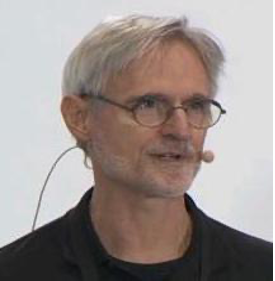
Peter Baumann

Description of Activities

My fellowship tackles the gap related to the insufficient models for achieving analysis-ready geo data. 

Fellow's country
Open Call Topics
Impact on SMEs (2nd Open Call)
SMEs benefit from these standards as they give guidance for implementation and allow products to be interoperable with the tools available in the market.
Impact on SMEs (7th Open Call)
Never before has there been a faster and cheaper way to obtain information about land, water, atmosphere, as well as human impact on it. In Europe, for example, the Copernicus satellite family provides the foundation for insight into our planet, together with long climate time series and further data, such as elevation models. For such Big Earth Data, spatio-temporal datacubes are an established cornerstone in OGC, ISO, and INSPIRE standardisation modelled as "coverages".
For robust, user-friendly, interoperable services, a technically sound coverage standards suite is indispensable. The ISO/OGC suite of coverage data and service model is instrumental for easy, interoperable handling, and a who’s who of primary open-source and proprietary geo tools support these standards. For example, the legal framework for a common European spatial data infrastructure, INSPIRE, has adopted CIS as its basis.
In summary, this work is of the highest practical relevance and visibility, with significant impact on geo data infrastructures and, ultimately, increased understanding of our planet and the impact we have on it, as well as everyday day-to-day use of insight from geo data.
Impact on SMEs (9th Open Call)
SMEs typically provide niche products which are accepted by the market only if they convey strong interoperability. The 19123-2 standard accomplishes this for images, image timeseries, and further Earth data. Spatio-temporal Earth data, as standardized with 19123-2, are instrumental for manifold purposes, such as environmental monitoring, disaster management, and many more.
Impact on society (2nd Open Call)
This standards work is of highest practical relevance and visibility, with significant impact on the interoperability of geo data infrastructures and, ultimately, increased understanding of our planet and the impact we have on it.
Impact on society (7th Open Call)
Better standards allow better tools and services, allowing us to gain a better understanding and insight into our planet. In particular, analysis of time series and fusion of multiple data sources, from in-situ to orbit, are critical enablers. The 19123-2 specification defines flexible, scalable, and interoperable ways of combining various spatio-temporal data sources into a standard picture; suitable tools may even provide dynamic services answering “any query, anytime”.
Organisation type
Organization
ISO standard editor, rasdaman GmbH
Portrait Picture
baumann
Proposal Title (2nd Open Call)
Enhanced Interoperability of Spatio-Temporal Datacubes
Proposal Title (7th Open Call)
Enhanced Interoperability of Big Geo Data
Proposal Title (9th Open Call)
Final Adoption of Big Earth Datacube standard
Standards Development Organisation
StandICT.eu Year
2026
Year
Topic (2nd Open Call)
Topic (7th Open Call)
Topic (9th Open Call)

Thomas Frisendal

Description of Activities

Since graph database technology is a key for meaningful and explainable machine learning and generative AI, it is evident that the GQL standard will have positive impact on applications in our societies.

Country
Denmark
Fellow's country
Open Call Topics
Open Call
Organisation type
Organization
Expert in the ISO 39075 - TF Informatik
Portrait Picture
Frisendal
Proposal Title (1st Open Call)
Danish participation in the ISO/IEC JTC 1/SC 32 WG 3 Database languages (SQL and GQL)
Standards Development Organisation
Topic
Big Data / Open Data / Public Sector Information
StandICT.eu Year
2026
Year
Topic (1st Open Call)

Jan Lindquist

Description of Activities

SME’s will be encouraged to build services on the wallet when there are key benefits for wallet holder focusing on privacy and security when sharing personal data.

Country
Sweden
Fellow's country
Impact on SMEs (6th Open Call)
My work has a direct impact on European SMEs and society. By contributing to standards like ISO/IEC 27560 and the EUDI Wallet Access Control in CEN TC224/WG20, I help create practical, privacy-focused frameworks that SMEs can adopt with minimal cost and complexity. These standards enable GDPR-compliant consent, transparency, and data minimization, reducing legal risk and building user trust.
Impact on SMEs (9th Open Call)
My work simplifies GDPR compliance for European SMEs by developing standards that make privacy receipts and access control both practical and cost-effective. By embedding lawful bases and user-facing transparency into consent and data access records, SMEs can demonstrate accountability while reducing legal risk. For society, this promotes stronger digital rights, user agency, and trust in the EUDI Wallet ecosystem.
Impact on society (6th Open Call)
In terms of broader European interests, my fellowship contributes to EU goals of digital sovereignty, user empowerment, and privacy leadership on the global stage. As the EUDI wallet is adopted across Europe, this framework will provide a scalable model for data protection and user-centric identity management that can be extended beyond digital wallets to other data-sharing contexts, enhancing Europe’s role as a privacy leader. With data privacy becoming a key competitive factor, this initiative not only strengthens the protection of EU citizens’ rights but also sets a high standard for digital identity solutions globally.
Impact on society (9th Open Call)
My work supports fundamental societal values by helping define how citizens can safely and transparently share their personal data through the European Digital Identity (EUDI) Wallet. At the heart of this is the development of access control standards that ensure individuals are not just passive data subjects, but active participants who can decide what data is shared, with whom, under what conditions, and for what declared purpose.
By enabling these controls through enforceable, machine-readable policies, the standard empowers users to exercise real agency over their digital identity—moving beyond consent screens toward meaningful privacy protections embedded in the architecture of the wallet itself. This aligns with the EU’s commitment to privacy, data minimisation, and purpose limitation under the GDPR.
The work also supports societal inclusion by ensuring that access control mechanisms are transparent and usable, helping citizens understand their rights and obligations, while also simplifying compliance for service providers. The inclusion of ISO/IEC 27560 in this framework ensures that all lawful bases for processing—not just consent—are clearly documented and traceable, which is especially important for use cases like healthcare, education, or public services.
Importantly, the open availability of ISO/IEC 27560 as a free standard lowers the barrier for adoption, supporting uptake by public administrations, SMEs, and civil society. This ensures that privacy-enhancing technologies are not limited to large commercial actors, but can benefit all layers of European society.
Overall, this work contributes to a more trustworthy, transparent, and citizen-centric digital identity ecosystem—one that upholds European values while supporting innovation, cross-border interoperability, and regulatory alignment.
Organisation type
Organization
Linaltec AB
Portrait Picture
Lindquist
Proposal Title (1st Open Call)
Consent records and privacy principles in eIDAS2 wallet
Proposal Title (3rd Open Call)
EUDI Wallet (eIDAS2) held personal data access control
Proposal Title (6th Open Call)
This fellowship directly contributes to strengthening the ICT Standards landscape in two key areas: digital identity access control and lawful data processing under GDPR
Proposal Title (9th Open Call)
EUDI Wallet (eIDAS2) held personal data access control
Standards Development Organisation
Topic
E-privacy
StandICT.eu Year
2029
Year
Topic (1st Open Call)
Topic (6th Open Call)