France

Available (28)

Showing 13 - 24 per page


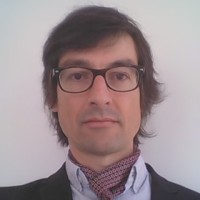
Loïc Blaive

Description of Activities

With this fellowship, I aim to consolidate the European activities and strengthen the European participation in my ISO work group which is yet too limited. In terms of international developments, the priority has been set to the final consolidation of the ISO 22726 series.

Fellow's country
Open Call Topics
Impact on society (2nd Open Call)
Standardisation of maps for connected and automated driving systems is a cornerstone for the deployment of such vehicles I see that it will indirectly have societal impacts on two key aspects: firstly, it contributes to the GHG emission reduction through a better use of vehicle engine, and secondly, I will favour societal inclusion of elderly and/or disabled people by keeping their ability to move.
Open Call
Organisation type
Organization
Independent expert, Loïc Blaive ITS Mobilités Conseils EIRL
Portrait Picture
Blaive
Proposal Title (2nd Open Call)
Development of ITS geographic data standardisation for highly automated driving - Phase 3
Role in SDO
Standards Development Organisation
StandICT.eu Year
2026
Year
Topic (2nd Open Call)

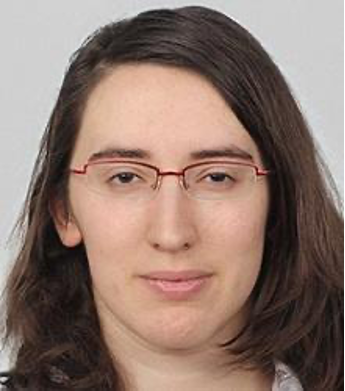
Lauriane Aufrant

Description of Activities

Overall, I am taking a more holistic view of the AI standardisation roadmap while pursuing in parallel my contributions to specific AI standards in SC 42 and JTC 21.

Fellow's country
Open Call Topics
Impact on SMEs (2nd Open Call)
While it is feared that a large number of standards associated with the AI Act could create an excessive burden for SMEs to understand and implement the new requirements, on the other hand, if there remain gaps in the standards’ coverage of the AI landscape, this will create huge challenges for SMEs whose products sit precisely in such areas (inability to comply).
Impact on SMEs (4th Open Call)
There is growing concern regarding the impact of the upcoming AI Act on the activity of SMEs in that field. While it is feared that a large number of standards associated to the AI Act could create an excessive burden for SMEs to understand and implement the new requirements, on the other hand if there remain gaps in the standards’ coverage of the AI landscape, this will create huge challenges for SMEs whose products sit precisely in such areas (inability to comply). I have started to make increased efforts to reach out to SMEs and collect their views and needs in those regards, and I am leveraging those inputs throughout my contributions in the various standards as well as in coordination.
Impact on SMEs (6th Open Call)
There is growing concern regarding the impact of the upcoming AI Act on the activity of SMEs in that field. While it is feared that a large number of standards associated to the AI Act could create an excessive burden for SMEs to understand and implement the new requirements, on the other hand if there remain gaps in the standards’ coverage of the AI landscape, this will create huge challenges for SMEs whose products sit precisely in such areas. I have started to make increased efforts to reach out to SMEs and collect their views and needs in those regards, and I am leveraging those inputs throughout my contributions in the various standards as well as in coordination.
In parallel, and beyond the considerations for the AI Act, I am also including in my work continuous considerations for interoperability aspects, which appear to be key to enable easier entry into the market for European SMEs.
Impact on SMEs (9th Open Call)
Harmonised standards are the preferred way for SMEs to comply with regulations under the New Legislative Framework (as the AI Act is) as they enable easy compliance with legal certainty and avoiding the need to resort to costly third-party legal support. The work is therefore to be developed with SMEs as one of the important targets. Furthermore, in the particular case of the AI Act, there are extra requirements in the EC standardisation request to consider the needs of SMEs/startups, and the AI Act Article about the quality management system includes special provisions for adaption of the obligations to the specificities of SMEs. In that context, I have pushed, first through comments in ballot then in the working group during comment resolution, for initiating dedicated discussions in that standard on those specificities with key stakeholders, which has proved beneficial even if still limited by the overall under-representation of SMEs in the standardisation work.
Impact on society (2nd Open Call)
My work serves as support to the preservation of consumer rights, by enabling more transparency, comparability, and clarity on the actual performance of AI systems in the market.
Impact on society (4th Open Call)
My efforts are currently focused on answering the standardisation request that CEN-CENELEC JTC21 received from the European Commission in relation to the AI Act. As the target dates grow closer, it seems that the current pool of experts is not sufficient to answer the diverse needs expressed in the request. I have thus initiated reinforced outreach efforts, as well as onboarding sessions for new experts.
Impact on society (9th Open Call)
My work serves as support to the preservation of consumer rights, by enabling more transparency, comparability, and clarity on the actual performance of AI systems in the market. Its societal impact also encompasses ethical aspects of AI such as human agency, for which appropriate use of explainability methods is a key enabler. More generally, it benefits the society at large through its interplay with the upcoming AI Act that will impact daily lives in Europe.
Organisation type
Organization
NLP lead scientist for Defense and security applications, Inria
Portrait Picture
affront
Proposal Title (2nd Open Call)
Towards accurate, transparent, and explainable systems in AI and NLP, in support of the AI Act
Proposal Title (4th Open Call)
Supporting the AI Act with standards for trustworthy systems and datasets in AI and NLP
Proposal Title (6th Open Call)
R in ISO/IEC AWI 24970 on AI logging, in JTC 21’s work item JT021024 on AI Risk Management, JT021029 cybersecurity of AI systems, or JT021039 quality management system for regulatory purposes.
Proposal Title (9th Open Call)
Fast delivery of initial contents for a range of standards across the AI Act standardisation request
Role in SDO
Standards Development Organisation
StandICT.eu Year
2026
Year
Topic (2nd Open Call)
Topic (6th Open Call)
Topic (9th Open Call)

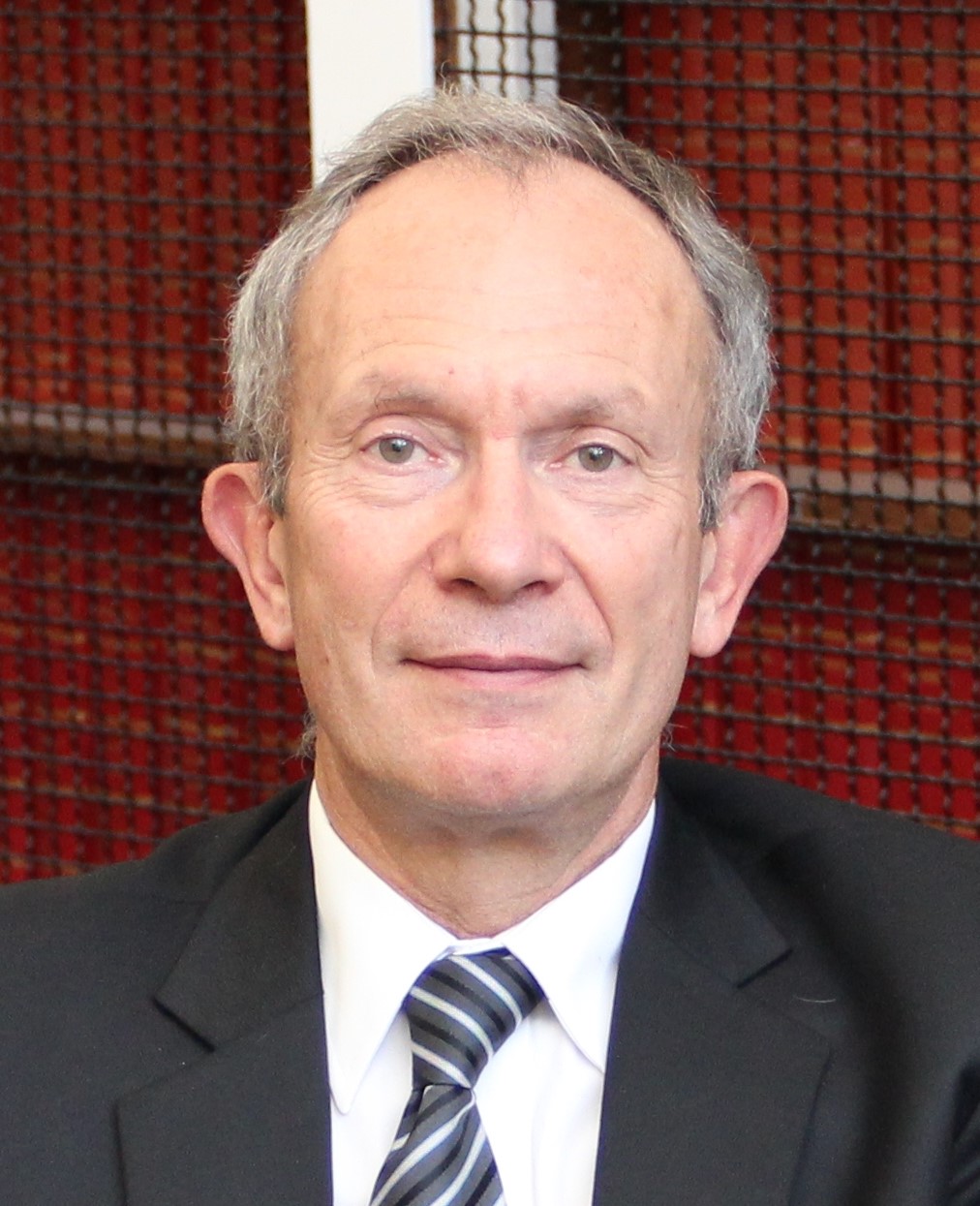
Antonio Kung

Description of Activities

In the transversal aspects in data spaces, there is a lack of guidance on the integration of security and privacy, and it is crucial to develop this further as it is a barrier for compliance with regulation (e.g. CRA, AI act). 

Fellow's country
Open Call Topics
Impact on SMEs (2nd Open Call)
The proposed standards on architecture and interoperability will enable SMEs to provide technology solutions. These standards will provide a stable business environment where SMEs can provide specific building blocks and know-how.
Impact on SMEs (4th Open Call)
The proposed standards on architecture and interoperability will enable SMEs to provide technology solutions. Standards will provide a stable business environment where SMEs can provide specific building blocks and know-how.
Impact on SMEs (6th Open Call)
The proposed standards on architecture and interoperability will enable SMEs to provide technology solutions. Standards will provide a stable business environment where SMEs can provide specific building blocks and know-how.
Impact on society (2nd Open Call)
The related standards will directly impact European industry, innovation and infrastructure enhancing the interoperability of data spaces. Indirectly, these standards being applied in varied IoT solutions, support the deployment of digital twin technologies and data spaces, e-health and digital well-being services, as well as affordable and clear smart energy.
Impact on society (6th Open Call)
With my activity, I contribute to the following impact from a standardization viewpoint:
Advancing architecture standards in line with European priorities (data space platforms from Europe)
Creating IoT standards that consider European results (interoperability based on SAREF, use cases from European applications)
Offering standards on cybersecurity assurance in line with regulation (Cybersecurity act)
Ensuring the availability of standards on AI trustworthiness (including security and privacy) in line with European stakeholders and regulation (AI act)
Organisation type
Organization
CEO, Trialog
Portrait Picture
kung
Proposal Title (2nd Open Call)
Integration of drivers (cybersecurity, privacy) and enablers (digital twins and IoT) in data spaces
Proposal Title (4th Open Call)
Integrating architecture, interoperability, cross-cutting aspects and AI standards in data spaces
Proposal Title (6th Open Call)
Contribution on data space (ISO/IEC 20151) as liaison officer between SC41 to SC38
Contribution on transversal aspects in data space
Role in SDO
Standards Development Organisation
StandICT.eu Year
2026
Year
Topic (2nd Open Call)
Topic (4th Open Call)
Topic (6th Open Call)

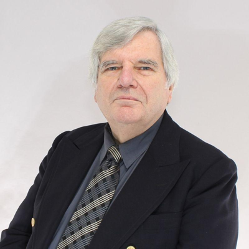
François Lorek

Description of Activities

This fellowship allows me to take part to all meetings concerning Cybersecurity, Privacy and Artificial Intelligence (even most are very early or very late in the day, as per rules for scheduling in SDO's), whilst being able to keep delivering standard based consulting especially for SMEs which need to comply for ISO 27001 certifications mostly. 

Fellow's country
Impact on SMEs (2nd Open Call)
Provide confidence to SMEs about concerned about Cybersecurity & Privacy standards within Artificial Intelligence.
Impact on SMEs (4th Open Call)
Many small and mediums companies are about to be impacted by Cybersecurity & Privacy, IoT & DT or Artificial Intelligence standards or are concerned by Cybersecurity & Privacy within Artificial Intelligence with a need to make their market and potential customers confident, especially in the context of forthcoming standards related to regulations at european level.
Impact on society (2nd Open Call)
The work being carried out under the guidance of the officers of which I am a member is helping to reassure businesses and civil society alike as to how confidence can be guaranteed, and how drifts can be avoided by providing maximum protection against today’s emerging threats associated with the acceleration of artificial intelligence-based technologies.
Impact on society (4th Open Call)
Among others ISO officer duties and ISO/CEN/CENELEC standardisation expert I expect to provide the following benefits: clarity of roadmap and scopes, encourage constructive collaboration and participation of SC41 & SC42 experts in SC27 AhG2 & 3, maintain a smooth and efficient organisation of working sessions,
Open Call
Organisation type
Organization
TRAX
Portrait Picture
lorek
Proposal Title (2nd Open Call)
Developing cybersecurity standardisation for Artificial Intelligence and Internet of Things
Proposal Title (4th Open Call)
Developing cybersecurity standardisation for Artificial Intelligence and Internet of Things
Role in SDO
Standards Development Organisation
StandICT.eu Year
2026
Year

Olivier Genest

Description of Activities

My work supports the development of smart energy grids, allowing to integrate a high share of renewable energy sources and to support new usages such as transports electrification (e-mobility). 

Fellow's country
Impact on SMEs (2nd Open Call)
My activities in IEC SyC Smart Energy and ISO/IEC JTC1/SC41 allow me to be aware of on-going standards development in the field of IoT and Smart Energy, which is crucial for a SME providing consulting and expertise on innovation.
Additionally, when worldwide standards are better aligned with the EU R&I ecosystem, it makes it easier for European SMEs to make business at worldwide level (less specific development). Finally, when the EU R&I ecosystem, including SMEs, is better aware of the standards, its players can develop solutions which are already aligned to worldwide practices.
Impact on SMEs (5th Open Call)
Firstly, my company Trialog is a European SME, which is impacted by my contribution. In particular, my activities in IEC SyC Smart Energy and ISO/IEC JTC1/SC41 allow me to be aware of on-going standards development in the field of IoT and Smart Energy, which is crucial for a company providing consulting and expertise on innovation. Also, my activities in the EU R&I ecosystem allow me to share experience based on our R&I projects and to learn from the experience of other projects and actors.
Secondly, the European SMEs from the smart energy sector, in particular those involved in EU R&I projects. Especially, worldwide standards are better aligned with the EU R&I ecosystem, making it easier for European SMEs to make business at worldwide level.
Impact on society (2nd Open Call)
My work supports the development of smart energy grids, allowing to integrate a high share of renewable energy sources and to support new usages such as transports electrification (e-mobility). Smart energy grids also enable a more efficient operation of the energy systems (i.e. less energy losses) and foster an active commitment of grid users (i.e. consumers or prosumers) towards the energy transition.
Organization
Director, Trialog
Portrait Picture
genest
Proposal Title (2nd Open Call)
Bridging the gap between EU R&I ecosystem and worldwide standardisation on Smart Energy
Proposal Title (3rd Open Call)
Bridging the gap between EU R&I ecosystem and worldwide standardisation on Smart Energy
Proposal Title (5th Open Call)
Bridging the gap between EU R&I ecosystem and worldwide standardisation on Smart Energy
Role in SDO
Standards Development Organisation
StandICT.eu Year
2026
Year
Topic (2nd Open Call)
Topic (3rd Open Call)
Topic (5th Open Call)

Christophe Ozcan

Description of Activities

With this fellowship, the aim is to create and continue working on a Technical standard proposal, and I decided to push such action to Joint Working Group 4 which is directly in liaison with ISO/SC27 in charge of the security of IT systems. 

Fellow's country
Open Call
Organisation type
Organization
CEO Crypto4All
Portrait Picture
ozcan
Proposal Title (3rd Open Call)
Smart Contract Auditing guidelines
Standards Development Organisation
StandICT.eu Year
2026
Year

Sebastian Wagner

Description of Activities

A successful standardisation of Ambient IoT will enable SMEs to create devices, applications and services that use Ambient-IoT-enabled chipsets. For instance, novel applications for inventory management are specific battery-less sensors for the use in industrial IoT.

Fellow's country
Open Call
Organisation type
Organization
Standardisation Engineer, EURECOM
Portrait Picture
Wagner
Proposal Title (3rd Open Call)
Ultra-Low Power Ambient IoT Devices in 5G-Advanced
Standards Development Organisation
StandICT.eu Year
2026
Year
Topic (3rd Open Call)

Amelie Gyrard

Description of Activities

The objective of this fellowship is to include European contributions on viable methodologies on semantic interoperability in ISO standards: ISO SC41 IoT and Digital Twin, with a focus on practical use cases in the domains of health/well-being.

Fellow's country
Impact on SMEs (4th Open Call)
Trialog is a SME so we are directly impacted by my contribution. Trialog was the coordinator of the ACCRA H2020 project (robots for ageing), which is now finished. We follow up with standard activities on robotics. In addition, the standards under consideration will benefit all the Smart Robotics and Internet of Robotic Things ecosystem, including SMEs. SME can develop tools and applications compliant with those standards.
Impact on SMEs (5th Open Call)
Trialog is a SME so we are directly impacted by my contribution. Trialog was the coordinator of the ACCRA H2020 project (robots for ageing) which is now finished. We follow up with standard activities on robotics. In addition, the standards under consideration will benefit all the Smart Robotics and Internet of Robotic Things ecosystem, including SMEs. SME can develop tools, applications compliant with those standards.
Impact on SMEs (7th Open Call)
Trialog is a SME so we are directly impacted by my contribution. In addition, the standards under consideration will benefit all the Smart Health and IoT ecosystem, including SMEs. SME can develop tools, applications compliant with those standards.
Impact on society (4th Open Call)
Accelerating the use of digital twins, as the existence of the semantic repository allows the digital twin to manage semantics while the physical twin is managing data. This methodology will ensure a consistent continuum between the physical twin and the digital twin.
Impact on society (6th Open Call)
The following impacts are identified at a general level:
The Internet of Things (IoT) addresses many societal challenges including climate change, resource and energy efficiency and ageing.
In the emerging IoT economy, voluntary global standards can accelerate adoption, drive competition, and enable cost-effective introduction of new technologies.
Standardisation facilitates the interoperability, compatibility, reliability, security and efficiency of operations on a global scale among different technical solutions, stimulating industry innovation and providing greater clarity to technology evolution.
Interoperability between IoT networks operated by different companies along the value chain opens up opportunities to address EU Policy objectives, e.g. greater resource efficiency for a more circular economy, sustainable and responsible supply chains through transparency and traceability, and others
Impact on society (7th Open Call)
The number of connected devices is expected to exceed 20 billion by 2020. This market will be fostered by proper interoperability standards. Europe is strong in IoT innovation and has made significant technical contributions (AIOTI) including in some specific standardization contexts. AIOTI now has a recognized presence at the ISO level, and it is now key to concretize this presence so that European innovation is well represented.
Organisation type
Organization
Principal Research & Innovation Consultant, Trialog
Portrait Picture
Gerard
Proposal Title (3rd Open Call)
IoT Semantic Interoperability for stress management, good health and well-being
Proposal Title (4th Open Call)
IoT Semantic Interoperability for Internet of Robotic Things
Proposal Title (5th Open Call)
IoT Semantic Interoperability for Active Assisted Living with robots for enhanced well-being
Proposal Title (6th Open Call)
Contribution to the standardization of IoT Interoperability by ensuring integration of SAREF
Proposal Title (7th Open Call)
IoT Semantic Interoperability for health informatics and well-being
Standards Development Organisation
StandICT.eu Year
2026
2029
Year
Topic (3rd Open Call)
Topic (4th Open Call)
Topic (5th Open Call)
Topic (6th Open Call)
Topic (7th Open Call)

Matthieu Briottet

Description of Activities

The expected impact of the project is to provide stakeholders with a certification as defined in article 42 of the GDPR, thus improving trust between actors in a context of PII processing.

Fellow's country
Open Call Topics
Open Call
Organisation type
Organization
IT Consultant, TRAX
Portrait Picture
Briottet
Proposal Title (3rd Open Call)
Build certification scheme for En17926 (refining ISO27701 in EU context) complying with art 42 GDPR
Standards Development Organisation
StandICT.eu Year
2026
Year
Topic (3rd Open Call)

Antonio Kung

Quote

My company essentially works around Smart Cities. This requires a strong understanding of architecture standards, notably on IoT. StandICT.eu2026 effectively supported my work at ISO/IEC – helping not only my company’s broader activities, but also feeding into the European Commission’s own priorities

Country
Image
Antonio Kung
Organization
Trialog

François Lorek

Quote

There is an increasing need to ensure transversal consistency between cybersecurity and artificial intelligence standardisation work. Standards are the path to build trust and provide confidence that risks are effectively managed, through compliance to these and when required also certification. This is all the more important for SMEs such as mine, and other SMEs I work for.

Country
Image
François Lorek
Organization
TRAX Solutions

Thierry Maxime

Description of Activities

Work on ICT readiness is essential for organisations facing increasing risks and threats in an unstable environment when they rely more and more on ICT, supplying them guidance to gain more resilience to infrastructures and organisations.

Fellow's country
Open Call
Organisation type
Organization
Information Security Consultant, TRAX
Portrait Picture
Maxime
Proposal Title (2nd Open Call)
Managing last steps ISO/IEC 27031 revision, European experts and liaisons inputs within the project
Standards Development Organisation
StandICT.eu Year
2026
Year